• Psychological Safety
  • Organisational Training
    • – Ignite: Senior Leaders
    • – Impact: Team Workshop
    • – Delivering Feedback
    • – Culture and Neurodiversity
    • – CRM for Non-Aviation Teams
    • – HOP: Human and Organisational Performance
    • – Train the Trainer
    • – Action Learning Sets
  • Online Workshops
    • – Train the Trainer
    • – Fundamentals
    • – Practices
    • – Leadership
    • – Advanced
    • – Measurement
    • – Workshop Facilitation
    • – HOP
    • – Delivering Feedback
    • – Thinking Like an Ecologist
  • Resources
    • – Tool Kits
    • – Free Resources
    • – Newsletter
    • – Articles
    • – Research
    • – Shop
    • – Community
    • – Practices
    • – What is Psychological Safety?
  • About Us
  • Contact
  • Search
  • Org Training
    • Ignite for Senior Leaders
    • Impact Team Workshop
    • Management Masterclass
    • Delivering Effective Feedback
    • Cultural and Neurodiversity
    • HOP: Human and Organisational Performance
    • CRM for Non-Aviation Teams
    • Train the Trainer
    • Action Learning Sets
  • Live Workshops
    • Full Live Course
    • Psychological Safety Fundamentals
    • Practice Masterclass
    • Leadership & Management
    • Advanced Psychological Safety
    • Measuring Psychological Safety
    • Workshop Design and Facilitation
    • HOP Fundamentals
    • Delivering Effective Feedback
    • Thinking Like an Ecologist: A Field Guide for Organisational change
  • On-Demand
    • Psychological Safety 101
psych safety logo white
  • Resources
    • Tool Kits
    • Free Resources
    • Knowledge Network
    • Newsletter
    • Shop
    • Podcasts & Talks
    • Videos
    • Community
    • Events & Psych Safety Days
  • Articles
    • Search
    • What is Psychological Safety?
    • The History of Psychological Safety
    • Psychological Safety Practices
    • Psychological Safety In The Workplace
    • Research
    • Measure Psychological Safety
    • Human and Organisational Performance (HOP)
  • The Psych Safety Team
    • Contact Us
    • About The Team
    • Tom Geraghty
    • Jade Garratt
  • Org Training
    • Ignite for Senior Leaders
    • Impact Team Workshop
    • Management Masterclass
    • Delivering Effective Feedback
    • Cultural and Neurodiversity
    • HOP: Human and Organisational Performance
    • CRM for Non-Aviation Teams
    • Train the Trainer
    • Action Learning Sets
  • Live Workshops
    • Full Live Course
    • Psychological Safety Fundamentals
    • Practice Masterclass
    • Leadership & Management
    • Advanced Psychological Safety
    • Measuring Psychological Safety
    • Workshop Design and Facilitation
    • HOP Fundamentals
    • Delivering Effective Feedback
    • Thinking Like an Ecologist: A Field Guide for Organisational change
  • On-Demand
    • Psychological Safety 101
psych safety logo white
  • Resources
    • Tool Kits
    • Free Resources
    • Knowledge Network
    • Newsletter
    • Shop
    • Podcasts & Talks
    • Videos
    • Community
    • Events & Psych Safety Days
  • Articles
    • Search
    • What is Psychological Safety?
    • The History of Psychological Safety
    • Psychological Safety Practices
    • Psychological Safety In The Workplace
    • Research
    • Measure Psychological Safety
    • Human and Organisational Performance (HOP)
  • The Psych Safety Team
    • Contact Us
    • About The Team
    • Tom Geraghty
    • Jade Garratt
Human and Organisational Performance (HOP)  ·  Newsletter  ·  Psychological Safety  ·  Psychological Safety In The Workplace

Reducing Power Gradients

February 7, 2025 • by Jade Garratt

Reducing Power Gradients

By Jade Garratt

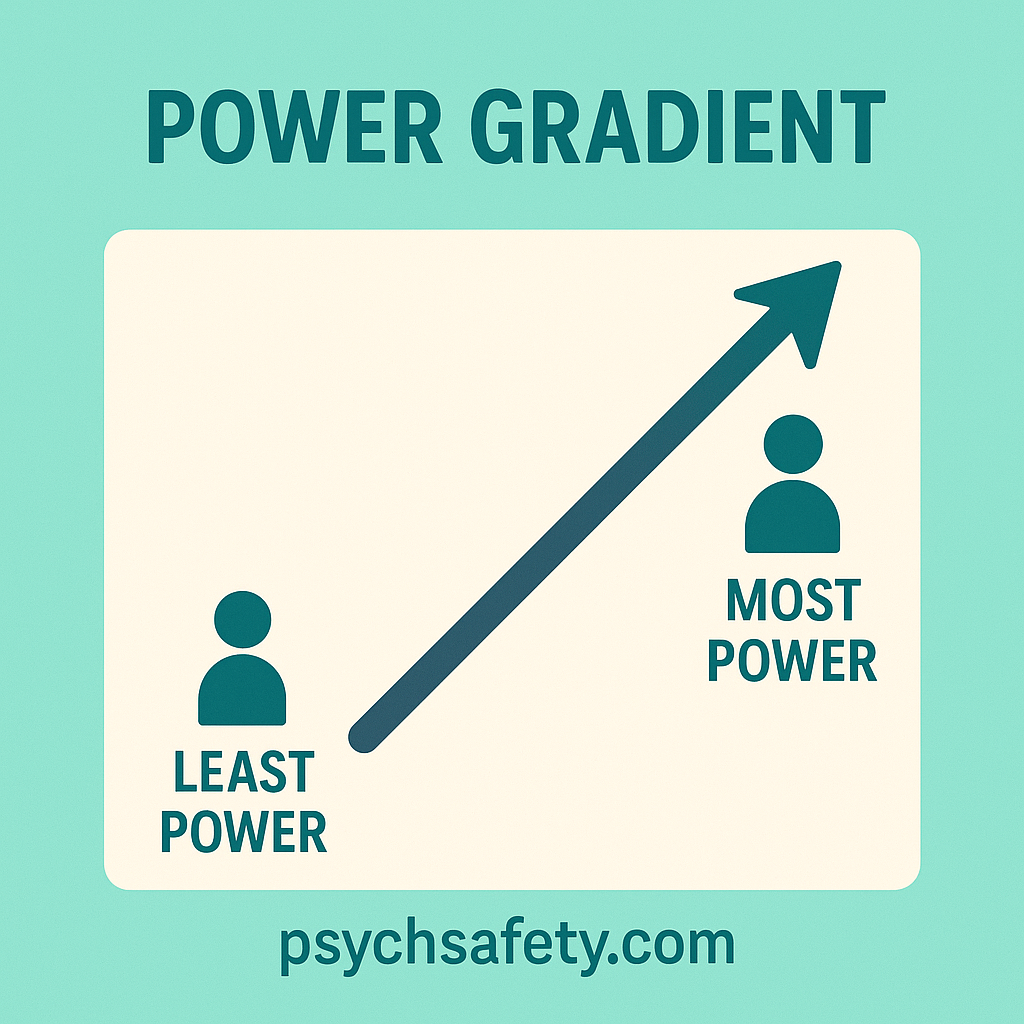
In our experience, the most effective lever for increasing psychological safety within a team is flattening the power gradient – the gap between those with the most power and those with the least. In practice, this usually means two things:

  1. Reducing the power held or overtly displayed by the most powerful individuals.
  2. Increasing the power and influence of those with the least.
Arrow pointing diagonally upwards illustrating the power gradient from the person with least power at the bottom to most power at the top

Different fields use different terms for this concept:

  • Power gradient
  • Power differential
  • Authority gradient
  • Cross-cockpit authority gradient (in aviation)
  • Power distance (at a cultural level)
  • Hierarchy differential
  • Status asymmetry

Whatever we call it, if we fail to address power dynamics in the group, then many of our efforts to increase psychological safety and performance are doomed to failure. When the power gradient is steep, speaking up feels very risky – even impossible.  History, academic research and real-world disasters all tell us the same thing: that on the whole, people don’t speak up against steep power gradients, even when lives are at risk.

This challenge is so critical that we’ve made “Reduce power gradients” Number 1 of our Top 10 ways to Foster Psychological Safety. The field of Human and Organisational Performance, or HOP, recognises this too, highlighting that when there is a steep power gradient between those who plan the work and those at the sharp end, doing the work, the gap between “work as imagined” and “work as done” grows dangerously wide. If we ignore power gradients, we don’t just create inefficiencies – we create risk. 

Photo by August de Richelieu

What do we mean by power? 

Well, the power held by people in a group may be obvious and overt – someone holds formal power because they’re the boss. But power can also be informal – perhaps someone is good friends with the boss, or they’ve simply got some longevity in the organisation. Then there’s socially constructed power, where certain identities hold influence because they align with long-standing norms – such as straight, white men in a field historically dominated by straight, white men.

types of power - informal, formal, demographic and expert
The Four Types of Power

The kind of power that generates steep power gradients comes from a particular mindset – one that sees power as “power over” others. In contrast, when leaders embrace notions of ‘power with’ or ‘power to,’ the power gradient flattens. Integral to the idea of “power with” is reciprocity, while “power to” is about enabling and liberating others. 

This isn’t a new idea. Mary Parker Follett, whose early 20th Century insights still shape progressive leadership thinking today, spoke of enabling generative cultures through “power to” instead of “power over” more than a century ago.*

But how do we reduce power gradients?

This question comes up often in our workshops, and the answer is always contextual. But there are many practical ways to reduce power gradients, as well as more radical ways of reconceptualising power to try to eliminate the power gradient altogether. 

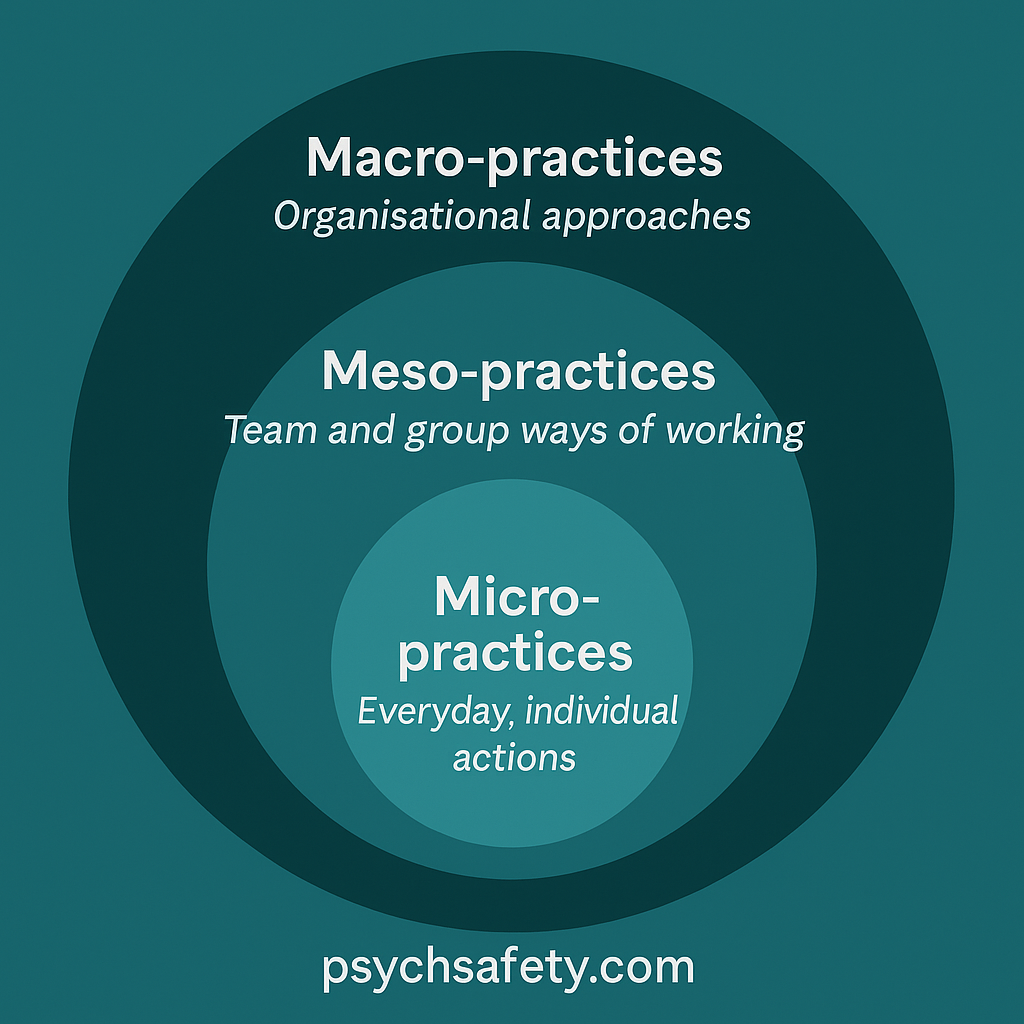
Three concentric circles with Micro practices in the centre - everyday individual actions, then meso practices - team and group ways of working, then macro-practices, organisational approaches

Micro-practices: everyday, individual actions

  • Use people’s names, not their rank, job titles or (please, no) their pay grade when talking with and about them.
  • Ask more questions. As Schein’s Humble Inquiry points out, asking questions from a place of genuine curiosity humbles us to the person whose answer or perspective we are seeking. We cede power to them. 
  • Acknowledge when you don’t know something. Saying “I don’t know – what do you think?” models humility and flattens power differentials.
  • Narrate your decision-making. Explaining your reasoning demystifies authority and invites discussion.
  • Give credit generously. Recognise contributions openly, ensuring those with less status are acknowledged for their ideas and work.

Meso-practices: teams and group practices

  • Share and rotate responsibilities around the group such as chairing meetings.
  • Ask everyone to introduce themselves at the beginning of a group meeting, sending out a clear message that everyone matters. 
  • Use techniques such as a “round robin” to structure turn taking and ensuring everyone has protected space to speak before more open discussion.
  • Beware of the HiPPO.
  • Rotate who speaks first, ensuring the most senior or dominant voices don’t stifle newer or quieter team members.
  • Provide silent “think time” after posing a question and before open discussion, to allow more of the team to engage with the question and formulate their response.
  • Hold Lean Coffee meetings where the agenda is decided in the moment, democratically, by everyone present. 

Macro-practices: organisational approaches

  • Move the authority to where the knowledge is, devolving decision making wherever possible to those closest to the sharp end of the work or point of care.
  • Co-create new approaches, ways of working and solutions to problems, don’t just “consult”.
  • Hold open forums for discussion with people at all levels of the organisation.
  • Redesign physical and virtual spaces to be more egalitarian. In aviation, cockpits are arranged to share power and promote shared responsibility, and we can apply this to our own contexts. For example, remove hierarchical seating arrangements in meetings (e.g., no “head of the table”), and ensure online meetings don’t visually prioritise certain participants (e.g., by defaulting to speaker view).
  • Turn your org chart on its side or upside down. Yes, it’s only a representation of reality, but the message it sends out is powerful. Visually reframing the pyramid hierarchy into something less “top-down” reinforces collective responsibility

It’s worth recognising that changing behaviour is often harder than we expect. Even the simplest of these ideas can feel surprisingly radical, especially when they challenge deeply held beliefs about status and authority. Reducing power gradients isn’t about erasing leadership; it’s about redistributing it, so that speaking up, taking ownership, and making decisions become shared responsibilities, not privileges reserved for a few. When power is shared, teams don’t just function better; they thrive. 

*We delve deeper into power hierarchy and structures in both our Psychological Safety for Leadership and Advanced Psychological Safety workshops.

Related Reading:

Typologies of Power
Top Ways to Foster Psychological Safety

Psychological Safety in Aviation

Evolution of Leadership and Management in Healthcare: Lessons from Aviation and Crew Resource Management.

Edgar Schein’s Humble Inquiry

The First Organisational Chart

Power and Mary Parker Follett

Work as Imagined vs Work as Done

Lean Coffee

Collaboration with Status Asymmetry: Evidence from HIV/AIDS Disease Control in China
Authority gradients between team workers in the rail environment: a critical research gap

Authority Gradients: SKYbrary

Power Distance Belief and Workplace Communication: The Mediating Role of Fear of Authority

Luva, B. and Naweed, A. (2023) Ergonomics, 67(1), pp. 34–49. doi: 10.1080/00140139.2023.2202844.


Psychological Safety in Practice

Psychological safety’s role in preventing workplace incidents

Despite a small but interestingly vocal part of the safety community insisting otherwise, psychological safety has been shown repeatedly to prevent and mitigate incidents (both accidents and near misses), and this new report from one of our clients, Eversheds Sutherland, demonstrates that. In research on blue collar workers in the UK (generally non-office, physical work), it was shown that as psychological safety between workers and their respective supervisors, peers and teams increases, the number of incidents experienced by participants decreases. Read the full report here.


Fostering psychological safety in healthcare

I was honoured to be asked to contribute to this wellbeing supplement to Eye News: the Bimonthly Review of Ophthalmology, on practical strategies for fostering psychological safety in healthcare. Systemic resource deficits alongside pressures to hit targets within the NHS contribute to increased mistakes, and lower psychological safety required to admit them. People are less likely to speak up about problems and concerns if they’re likely to create more work in an already overwhelmed system. But even if large-scale systemic changes for our healthcare system are some way off, we can all make little changes to our own behaviour and practice, which cumulatively, could foster dramatic improvements in our experience at work, as well as patient safety. 


Team Rituals

One of the most effective of our 160+ ways to foster psychological safety in a team is to foster and encourage team rituals. Those things that a team does together, which may or may not have any actual rationale behind them, and that helps signify the team’s shared identity and bond. Here’s an article in HBR about the power of rituals in a team, although I feel they’ve missed a key point, which is that the most powerful team rituals emerge organically. The authors acknowledge that it’s important for rituals to be co-created, not imposed, but in our experience it’s even better if we surface what rituals the team already has, and build on those. 


Psychological safety is often mistaken for emotional comfort.

This is a nice piece in Forbes by Michael Hudson on the evolution of psychological safety over time, and addressing the frequent misconception that it psychological safety is about comfort, when in fact, psychological safety can be more productively uncomfortable.


Psychological safety in teacher retention

This paper by Patrick McClure investigated the impact of psychological safety on teacher retention in middle schools in the USA and showed that psychological safety is statistically significant in predicting a teacher’s intention to leave. 

Leadership vs Management

This week’s poem:

Dangerous Coats, by Sharon Owens

Someone clever once said
Women were not allowed pockets
In case they carried leaflets
To spread sedition
Which means unrest
To you & me
A grandiose word
For commonsense
Fairness
Kindness
Equality
So ladies, start sewing
Dangerous coats
Made of pockets & sedition

See how this article connects
Explore its relationships with other ideas in the knowledge network.
Explore in network →

Healthcareinclusionmary parker follettperformancepowerPractices that help foster psychological safetypsychological safetyteachingteams

Jade Garratt

Jade Garratt is co-founder of Psych Safety, a Senior Fellow of the Higher Education Academy, and a PhD researcher at the University of Nottingham. She writes about psychological safety, power and what it actually means to create systems that work for people, not against them.

Related Articles


cognitive load - psychsafety
Human and Organisational Performance (HOP)  ·  Newsletter  ·  Psychological Safety  ·  Psychological Safety In The Workplace
Cognitive Load and Psychological Safety
March 16, 2023
circles of control
Newsletter  ·  Psychological Safety  ·  Psychological Safety In The Workplace
Work doesn’t have to suck
January 10, 2025
ridge and furrow fields, leicestershire
Efficiency versus Resilience
Previous Article
A circular diagram titled "The Virtuous Cycle of Accessibility & Psychological Safety." It highlights the relationship between improved psychological safety and accessibility. Key points for psychological safety include increased trust, honest feedback, shared vulnerabilities, identified barriers, and co-created solutions. For accessibility, benefits include full participation, diverse engagement options, adaptive technology, and inclusive design.
Accessibility: A Road to Psychological Safety
Next Article
  • Subscribe to the Psychological Safety Newsletter

  • psychological safety train the trainer
  • Get Certified! Join online workshops, or explore training and consultancy for leaders, teams and organisations.

    Discover our training options for Human and Organisational Performance and CRM for non-aviation teams.

    If you're a trainer, consultant or facilitator, get certified in our Train the Trainer complete online programme and download the Training Materials for Facilitators and Trainers.

  • psychological safety on-demand training
  • building and maintaining psychological safety for your team
    Download the complete Practitioners' guide to psychological safety
  • psychological safety trainer toolkit
  • Download the Psychological Safety Trainer Toolkit. Containing powerful resources that you can use to deliver your own training and workshops!

  • psych safety logo

    Sponsorship and advertising. Reach over 11,000 weekly readers and 500,000 online visitors with your message in our newsletter.

  • theres no such thing as too much psychological safety
    Grab Psychological Safety Stickers from our Online Shop!
  • Psych Safety Day

    Find out more about our Psych Safety Days - in-person and virtual events to share, learn, and connect with other enthusiasts, practitioners and researchers on psychological safety and related topics.

  • Psychological Safety Knowledge Network

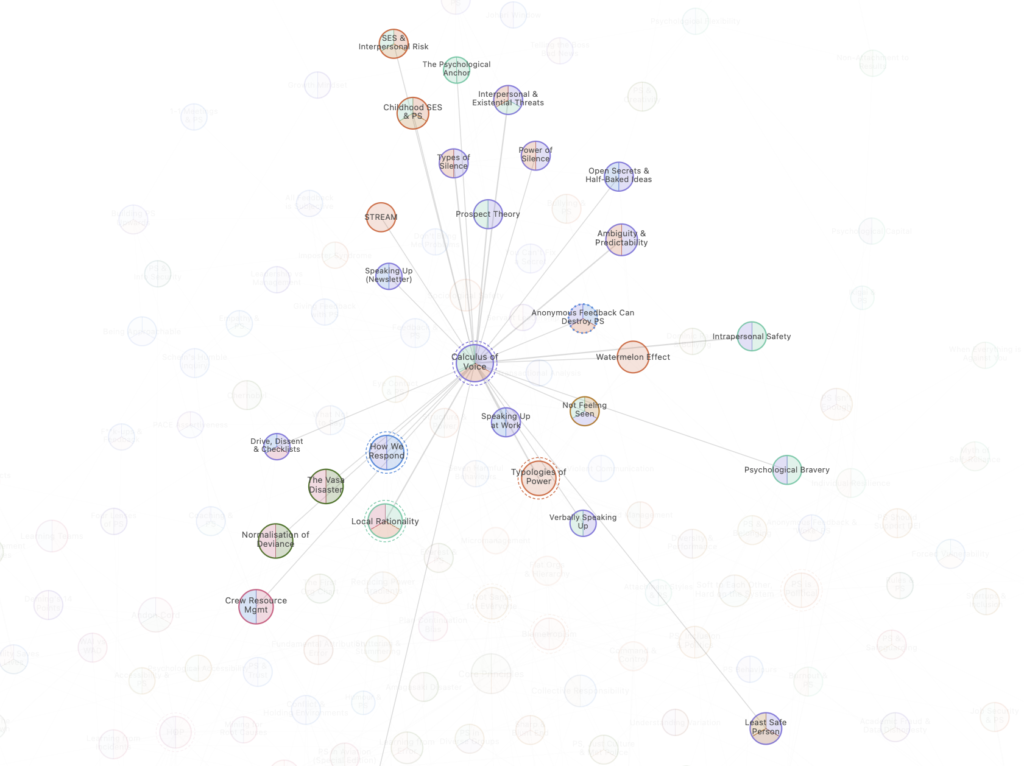
    Use our Psych Safety Semantic Knowledge Map to explore hundreds of articles, papers, resources and tools. 

  • Categories

    • Newsletter
    • Psychological Safety
      • Create and Maintain
      • Human and Organisational Performance (HOP)
      • In Technology
      • Learning and Development
      • Measure
      • Psychological Safety In The Workplace
      • Theory and Research
  • Recent Posts

    • Reading the air: high and low context communication in teams

      Reading the air: high and low context communication in teams
      June 8, 2026
    • Who gets to decide if psychological safety matters?
      Who gets to decide if psychological safety matters?
      June 5, 2026
    • Accountability
      Accountability
      May 29, 2026
    • Qualitative Measurement of Psychological Safety

      Qualitative Measurement of Psychological Safety
      May 22, 2026
    • The Psych Safety Knowledge Map
      The Psych Safety Knowledge Map
      May 15, 2026
    • Ambiguity, predictability, and psychological safety

      Ambiguity, predictability, and psychological safety
      May 1, 2026
    • The Calculus of Voice
      The Calculus of Voice
      April 23, 2026
    • Contracting and recontracting
      Contracting and recontracting
      April 16, 2026
    • The Vasa
      The Vasa
      April 1, 2026
    • Learning from Error, or Punishing It?
      Learning from Error, or Punishing It?
      March 27, 2026
    • The “Utility” of Psychological Safety
      The “Utility” of Psychological Safety
      March 20, 2026
    • Psychological Flexibility
      Psychological Flexibility
      March 19, 2026
    • Be soft to each other, and hard on the system

      Be soft to each other, and hard on the system
      March 12, 2026
    • "Fake it till you make it"
      "Fake it till you make it"
      March 12, 2026
    • The SANE Effect
      The SANE Effect
      February 20, 2026
    • Learning Teams
      Learning Teams
      January 30, 2026
    • ST.R.E.A.M: Status Rules Everything Around Me
      ST.R.E.A.M: Status Rules Everything Around Me
      January 23, 2026
    • Growth Mindset
      Growth Mindset
      January 16, 2026
    • The Streetlight Effect
      The Streetlight Effect
      January 8, 2026
    • The "Fist of Five"
      The "Fist of Five"
      December 19, 2025
    • Psychological Bravery
      Psychological Bravery
      December 18, 2025
    • Psych Safety Book List 2025
      Psych Safety Book List 2025
      December 18, 2025
    • Psych Safety 2025 Unwrapped
      Psych Safety 2025 Unwrapped
      December 15, 2025
    • Plan Continuation Bias
      Plan Continuation Bias
      December 12, 2025
    • Whistleblowing and Psychological Safety
      Whistleblowing and Psychological Safety
      December 4, 2025
    • How Childhood Socioeconomic Status Shapes Psychological Safety and Career Risk-Taking at Work
      How Childhood Socioeconomic Status Shapes Psychological Safety and Career Risk-Taking at Work
      November 27, 2025
    • Safety and the Myth of Self-Reliance
      Safety and the Myth of Self-Reliance
      November 24, 2025
    • The Watermelon Effect and "Greenwashing"

      The Watermelon Effect and "Greenwashing"
      November 7, 2025
    • Individual Resilience
      Individual Resilience
      October 31, 2025
    • Counterfactuals
      Counterfactuals
      October 24, 2025
    • Coaching and Psychological Safety
      Coaching and Psychological Safety
      October 17, 2025
    • Five Ecological Concepts for Working in Organisational Change

      Five Ecological Concepts for Working in Organisational Change
      October 9, 2025
    • The Sharp End & Blunt End of Education
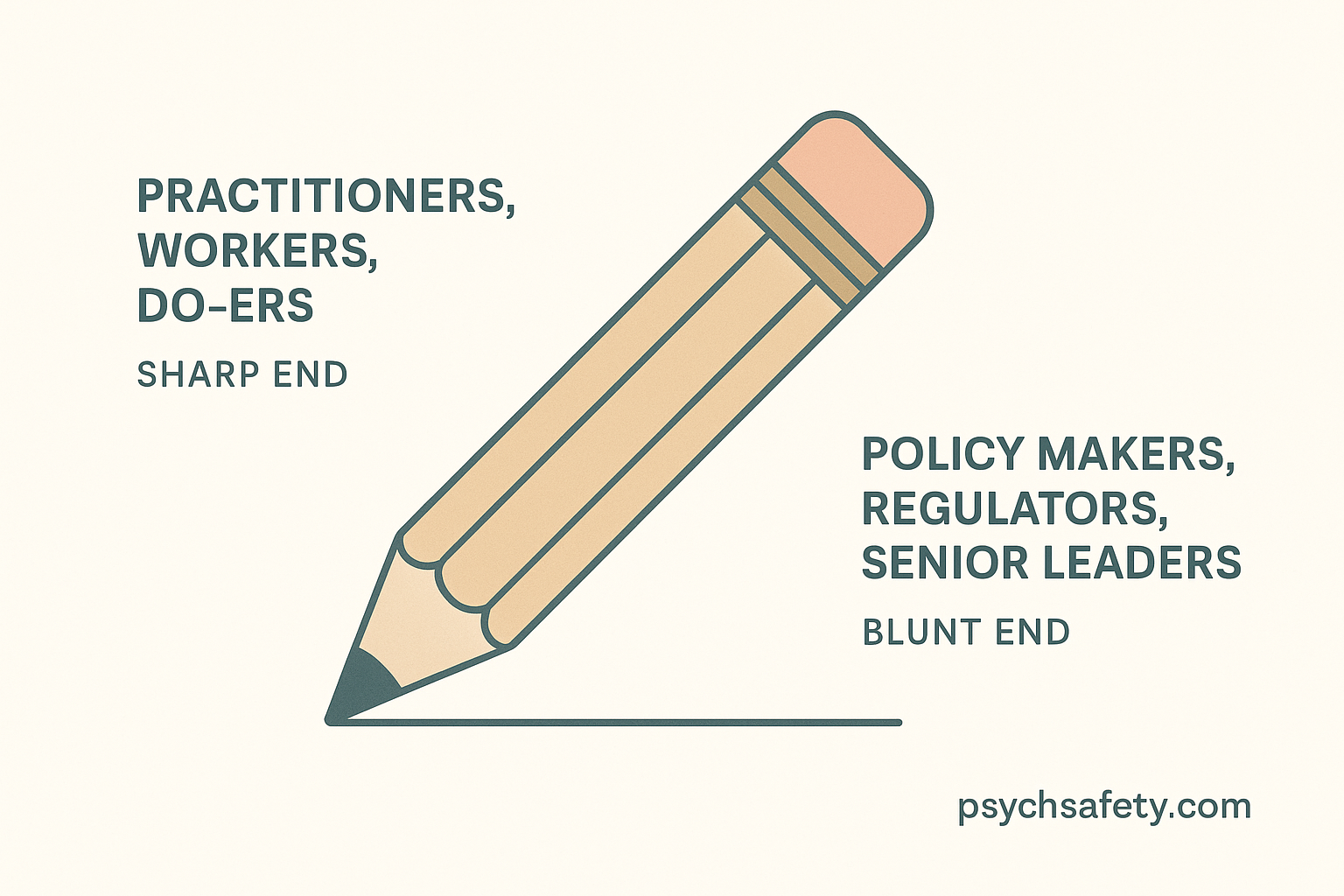
      The Sharp End & Blunt End of Education
      October 3, 2025
    • Forced Vulnerability
      Forced Vulnerability
      September 26, 2025
    • New Sticker Drop! "Zombies Are Scary"
      New Sticker Drop! "Zombies Are Scary"
      September 22, 2025
    • Reflections - Part Four: A Rights-Based Approach

      Reflections - Part Four: A Rights-Based Approach
      September 16, 2025
    • Reflections - Part Three: The Safety to Dissent
      Reflections - Part Three: The Safety to Dissent
      September 12, 2025
    • Reflections - Part Two: Power and Difference
      Reflections - Part Two: Power and Difference
      September 4, 2025
    • The Psychological Safety Trainer Toolkit
      The Psychological Safety Trainer Toolkit
      September 1, 2025
    • Reflections on Psychological Safety: Five Years of Learning
      Reflections on Psychological Safety: Five Years of Learning
      August 29, 2025
    • Not Feeling Seen: Eye Contact and Psychological Safety
      Not Feeling Seen: Eye Contact and Psychological Safety
      August 21, 2025
    • Psychological Safety Isn't Enough
      Psychological Safety Isn't Enough
      August 15, 2025
    • Psych Safety Day / Week 2026
      Psych Safety Day / Week 2026
      August 11, 2025
    • The Amagasaki Disaster
      The Amagasaki Disaster
      August 8, 2025
    • Psychological safety isn't the same for everyone
      Psychological safety isn't the same for everyone
      August 4, 2025
    • Psychological Safety Books for Children

      Psychological Safety Books for Children
      August 1, 2025
    • Carl Rogers, Psychological Safety and Creativity

      Carl Rogers, Psychological Safety and Creativity
      July 25, 2025
    • The State of Psychological Safety Survey: 2025
      The State of Psychological Safety Survey: 2025
      July 19, 2025
    • Barriers to Psychological Safety
      Barriers to Psychological Safety
      July 18, 2025
    • How you respond matters.
      How you respond matters.
      July 11, 2025
    • Practices that Foster Psychological Safety
      Practices that Foster Psychological Safety
      July 4, 2025
    • Feedback in the workplace
      Feedback in the workplace
      June 27, 2025
    • Psych Safety Day 2025
      Psych Safety Day 2025
      June 21, 2025
    • Job Security and Psychological Safety
      Job Security and Psychological Safety
      June 20, 2025
    • How familiar are people with the concept of psychological safety?
      How familiar are people with the concept of psychological safety?
      June 13, 2025
    • Twitter
    • LinkedIn


Sign up to our newsletter & get weekly insights and research

About

The Psychological Safety Team
Our Mission
Our Core Principles
Privacy Policy
Terms of Business

Learn

Corporate Training
Online Workshops
Newsletter
Professional Certification
Explore our semantic knowledge map

Tools

Tool Kits
Articles
What is Psychological Safety?
The History of Psychological Safety

Get Connected

Contact us
Attend a Meetup
Join the Community
Connect with us on LinkedIn
View our YouTube Channel
© 2025 Iterum Ltd
We support LGBTQ+ rights all year round. But we also celebrate pride too.
We support LGBTQ+ rights all year round. But we also celebrate pride!
Content on this website is CC BY-NC-SA
Written by humans, not by AI