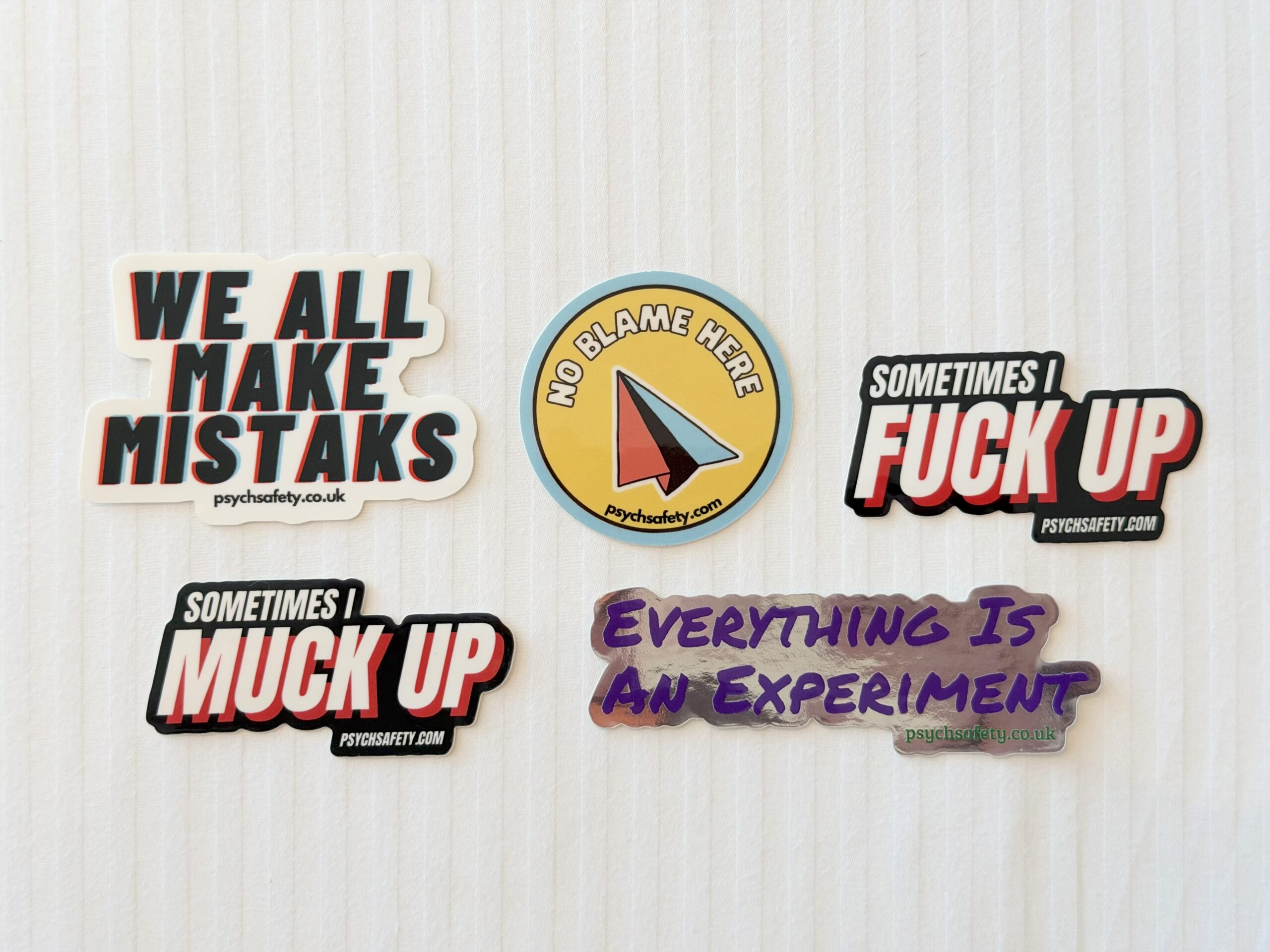
We publish about once a week, and have done so for about six years. There are now over 350 articles on psychsafety.com as a result. So, despite our best efforts, the odd error has slipped through, and here I’m writing […]

Newsletter

The Case for Less Eye Contact We’ve made the case before that the mainstream advice about eye contact and psychological safety is highly western-centric and neurotypical, and lacks context and nuance. Not only does it get causation backwards, but in […]
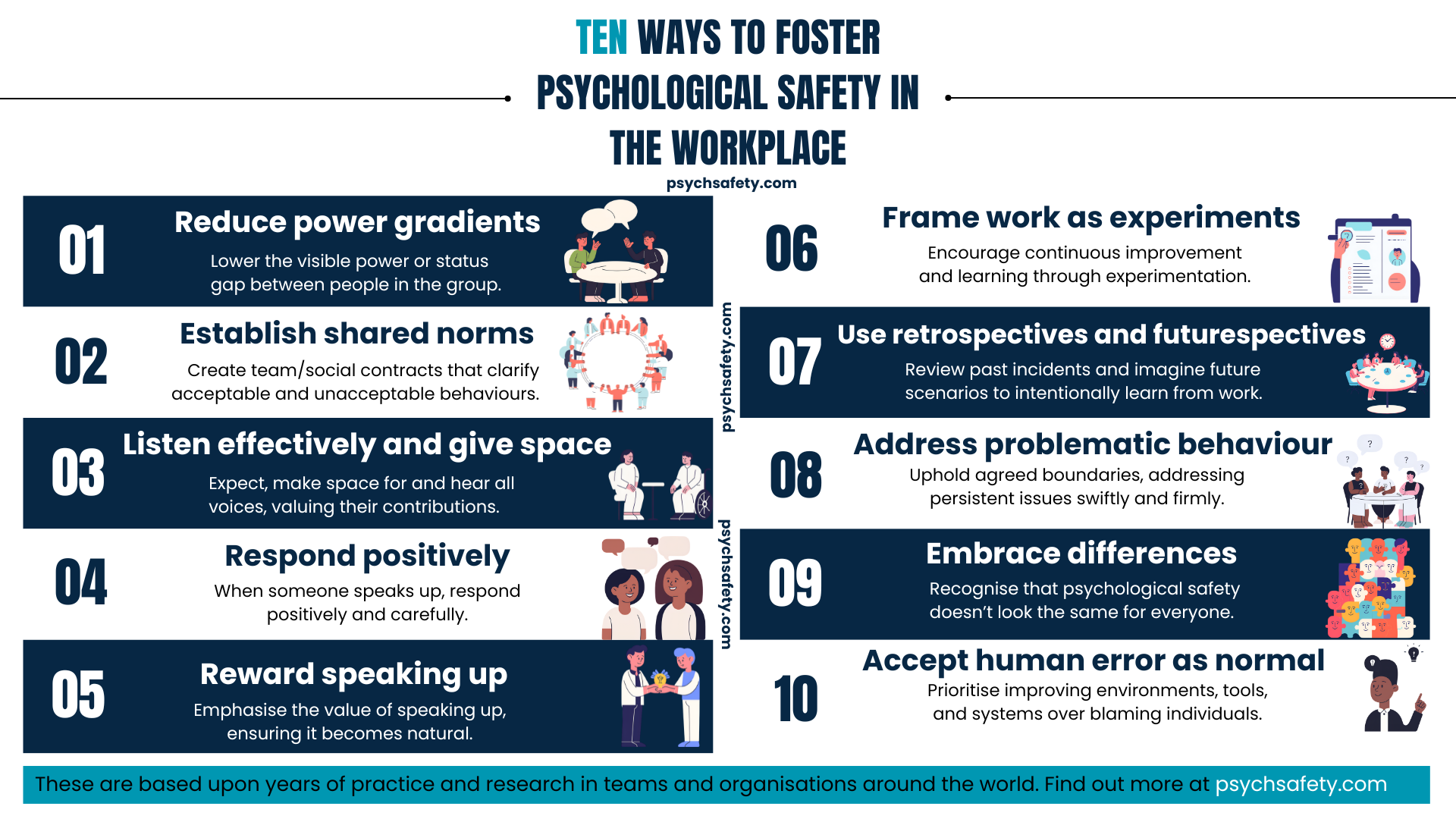
You may well have heard the phrase ‘psychological safety’ thrown around – perhaps referenced in a workshop title, mentioned as part of a training day or in an article someone forwarded you. In the last few years, ‘psychological safety’ has […]

Organisational substrate is the accumulated physical and non-physical matter that an organisation lives in and on: the power structures, tooling, incentives and punishments, memory and story that determine what can thrive and what cannot.

Crisis-Ready Teams I’m by no means a serial corporate dinner attendee, but I do feel I’ve sat through my fair share of after-dinner leadership talks. The speakers are usually held up as shining examples of courage, resilience and leadership under […]

Body Language and Non-Verbal Communication There’s a whole industry, and a lot of terrible advice, built on the promise that we can read people’s minds through their “body language”. Common tropes include things like averted eyes or a lack of […]

A Critique of The Four Stages of Psychological Safety – a second edition We’ve written about the Four Stages of Psychological Safety before (way back in 2020 in fact), and that earlier piece was somewhat generous. It concluded that the […]

The more elaborate and expensive our system for understanding something, the less we may actually understand it. Ecologists face the same problem — you can’t measure the health of an ecosystem directly — and solved it by learning to read indicator species instead. This piece asks what those look like in organisations, why the same signal means different things in different habitats, and why nobody’s listening to the worm at the bottom of the dashboard.

These two pieces originally went out in the Psychological Safety Newsletter, the second (“I was wrong about the parachutes”) a couple of weeks after the first. They have proven rather popular, so we’ve posted them online here too. Parachutes and “Evidence […]

Seven principles for measuring people without mistaking them for data. In theory at least, we measure psychological safety because we want more of it. That, in fact, is often part of the problem. The act of measuring changes the thing […]

The Strange Confidence of 360 Degree Feedback 360 degree feedback promises that it will offer truth in all directions. It will illuminate blind spots, reveal the development areas people couldn’t see before and unlock potential they didn’t know they had. […]

Reading the air: high and low context communication in teams Picture the scene: you’re in a meeting with your new team. You ask what you think is a reasonable question, and knowing glances are exchanged across the room. A couple […]
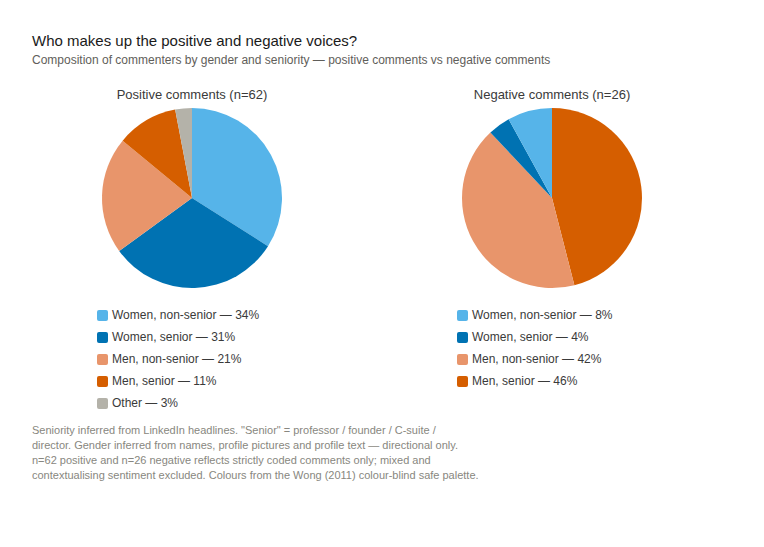
Who gets to decide if psychological safety matters? Is scepticism about psychological safety a luxury position? What the LinkedIn discourse reveals about who has positive or negative opinions on psychological safety, and why it might matter more than we think. […]

Many organisations “hold people accountable” by imposing negative consequences for failure. The organisations that actually handle failure best are the ones that make it safe to give an honest account – they foster account-ability. They are not the same thing. They are, in fact, complete opposites.

Qualitative Measurement of Psychological Safety What the survey can’t tell you A few months back, I was preparing for a workshop with a client, and they shared, anonymised, their staff engagement survey data. We both sat on our respective screens, […]
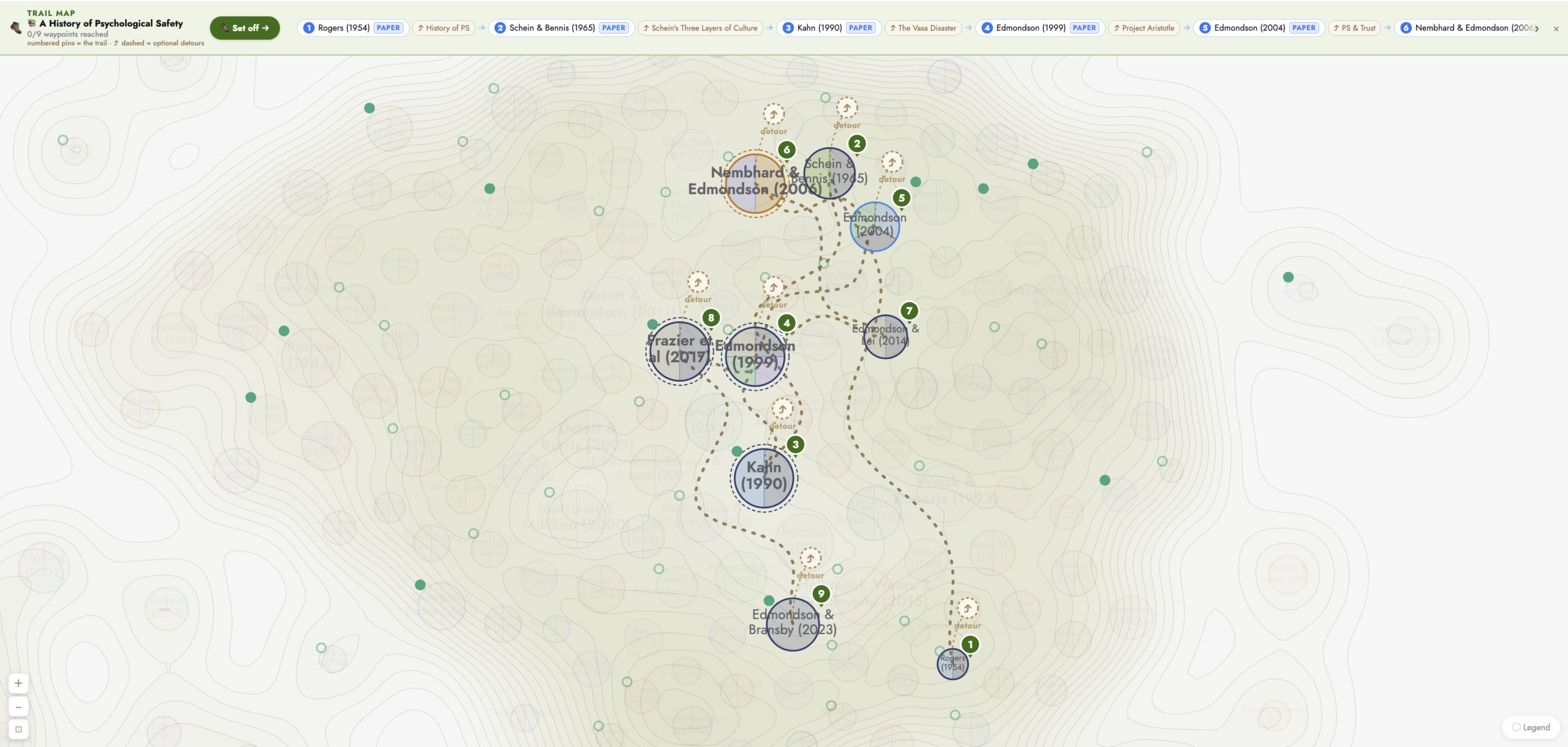
The Field Guide: An interactive knowledge map We’re super excited to announce that The Field Guide is now generally available! For a long time now, we’ve been thinking about a way to make our over 300 psychsafety.com articles more easily […]

Predictability and the “calculus of voice” We’ve previously covered the “calculus of voice”: the mechanism by which we decide whether to speak up, stay silent, soften what we were going to say, or say something else entirely. This mental risk […]

The Calculus of Voice “Between stimulus and response, there is a space. In that space is our power to choose our response. In our response lies our growth and our freedom.”Viktor Frankl, psychiatrist and Holocaust survivor The tacit calculus of […]
Contracting and recontracting A lot of relationship friction comes from faulty assumptions: two (or more) people each operating on their own mental model of what was agreed, who’s responsible for what, and what counts as acceptable, without ever actually comparing […]

The Vasa Disaster A few years ago, I was working for a client in Stockholm and in some free time, I visited the wreck of the Vasa, the world’s best-preserved 17th-century ship. She’s housed in a museum built specifically around […]

The cases of Dr Hadiza Bawa-Garba and RaDonda Vaught Content note: this article discusses the deaths of patients, including a child. Co-created and edited by Jade Garratt and Bea Poyton. Dr Hadiza Bawa-Garba is a British paediatrician. RaDonda Vaught is […]

The Futility of Utility If we want to make the argument for psychological safety in most organisations, we often need to speak the language of value. There is genuinely strong evidence that psychological safety is associated with better team performance, […]

A while ago I read a post in a parenting forum that struck me for a few reasons. It was by a mum who had taken her daughter to the library, and had watched while her young daughter very politely […]

Our wonderful Deisa Tremarias designed this sticker to reflect the various ideas of people such as Deming (“A bad system will beat a good person every time“) to help remind us that we’re all part of a system that influences our […]

Why “Fake It Till You Make It” Doesn’t Work for Psychological Safety I remember early in a new job – one I was excited about and keen to make my mark in – I made a decision to be honest […]
Page 1 of 14

