





• Psychological Safety
  • Organisational Training
    • – Ignite: Senior Leaders
    • – Impact: Team Workshop
    • – Delivering Feedback
    • – Culture and Neurodiversity
    • – CRM for Non-Aviation Teams
    • – HOP: Human and Organisational Performance
    • – Train the Trainer
    • – Action Learning Sets
  • Online Workshops
    • – Train the Trainer
    • – Fundamentals
    • – Practices
    • – Leadership
    • – Advanced
    • – Measurement
    • – Workshop Facilitation
    • – HOP
    • – Delivering Feedback
    • – Thinking Like an Ecologist
  • Resources
    • – Tool Kits
    • – Free Resources
    • – Newsletter
    • – Articles
    • – Research
    • – Shop
    • – Community
    • – Practices
    • – What is Psychological Safety?
  • About Us
  • Contact
  • Search
  • Org Training
    • Ignite for Senior Leaders
    • Impact Team Workshop
    • Management Masterclass
    • Delivering Effective Feedback
    • Cultural and Neurodiversity
    • HOP: Human and Organisational Performance
    • CRM for Non-Aviation Teams
    • Train the Trainer
    • Action Learning Sets
  • Live Workshops
    • Full Live Course
    • Psychological Safety Fundamentals
    • Practice Masterclass
    • Leadership & Management
    • Advanced Psychological Safety
    • Measuring Psychological Safety
    • Workshop Design and Facilitation
    • HOP Fundamentals
    • Delivering Effective Feedback
    • Thinking Like an Ecologist: A Field Guide for Organisational change
  • On-Demand
    • Psychological Safety 101
psych safety logo white
  • Resources
    • Tool Kits
    • Free Resources
    • Knowledge Network
    • Newsletter
    • Shop
    • Podcasts & Talks
    • Videos
    • Community
    • Events & Psych Safety Days
  • Articles
    • Search
    • What is Psychological Safety?
    • The History of Psychological Safety
    • Psychological Safety Practices
    • Psychological Safety In The Workplace
    • Research
    • Measure Psychological Safety
    • Human and Organisational Performance (HOP)
  • The Psych Safety Team
    • Contact Us
    • About The Team
    • Tom Geraghty
    • Jade Garratt
  • Org Training
    • Ignite for Senior Leaders
    • Impact Team Workshop
    • Management Masterclass
    • Delivering Effective Feedback
    • Cultural and Neurodiversity
    • HOP: Human and Organisational Performance
    • CRM for Non-Aviation Teams
    • Train the Trainer
    • Action Learning Sets
  • Live Workshops
    • Full Live Course
    • Psychological Safety Fundamentals
    • Practice Masterclass
    • Leadership & Management
    • Advanced Psychological Safety
    • Measuring Psychological Safety
    • Workshop Design and Facilitation
    • HOP Fundamentals
    • Delivering Effective Feedback
    • Thinking Like an Ecologist: A Field Guide for Organisational change
  • On-Demand
    • Psychological Safety 101
psych safety logo white
  • Resources
    • Tool Kits
    • Free Resources
    • Knowledge Network
    • Newsletter
    • Shop
    • Podcasts & Talks
    • Videos
    • Community
    • Events & Psych Safety Days
  • Articles
    • Search
    • What is Psychological Safety?
    • The History of Psychological Safety
    • Psychological Safety Practices
    • Psychological Safety In The Workplace
    • Research
    • Measure Psychological Safety
    • Human and Organisational Performance (HOP)
  • The Psych Safety Team
    • Contact Us
    • About The Team
    • Tom Geraghty
    • Jade Garratt
Human and Organisational Performance (HOP)  ·  Newsletter  ·  Psychological Safety

The Vasa

April 1, 2026 • by Tom Geraghty

The Vasa Disaster

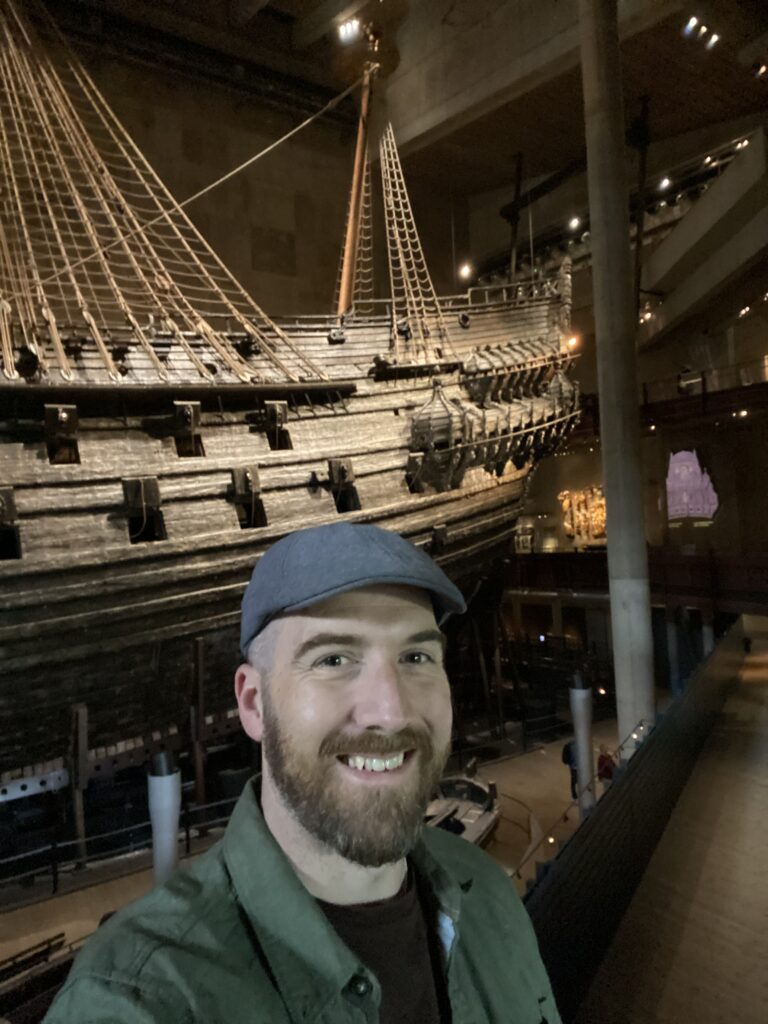
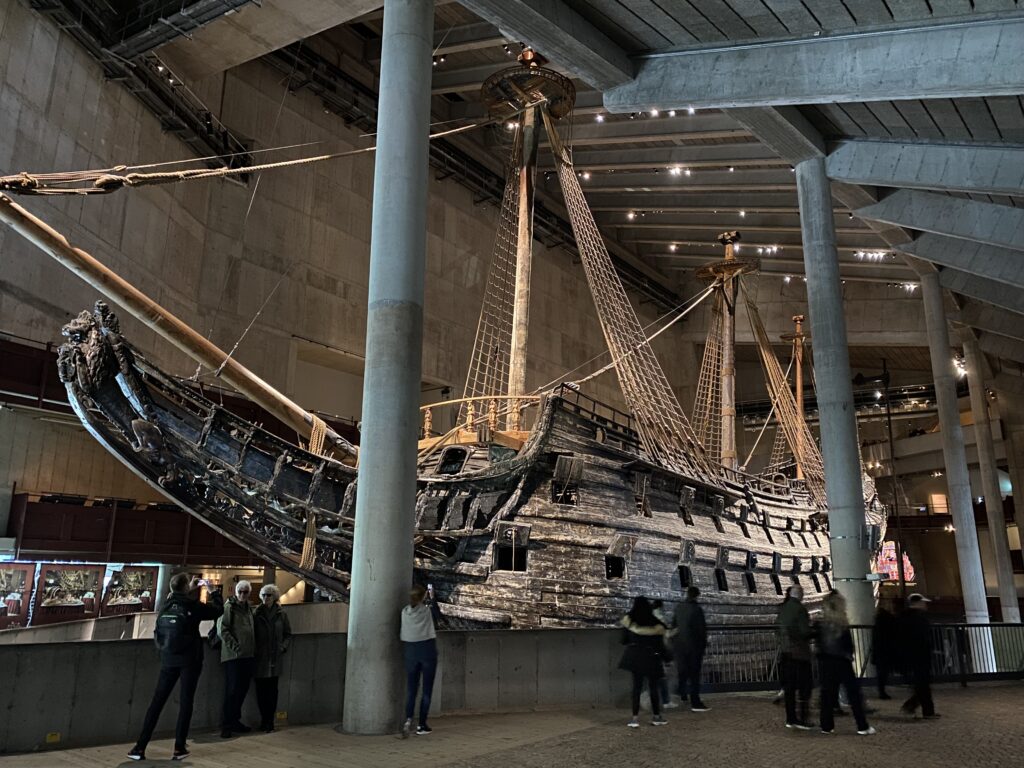
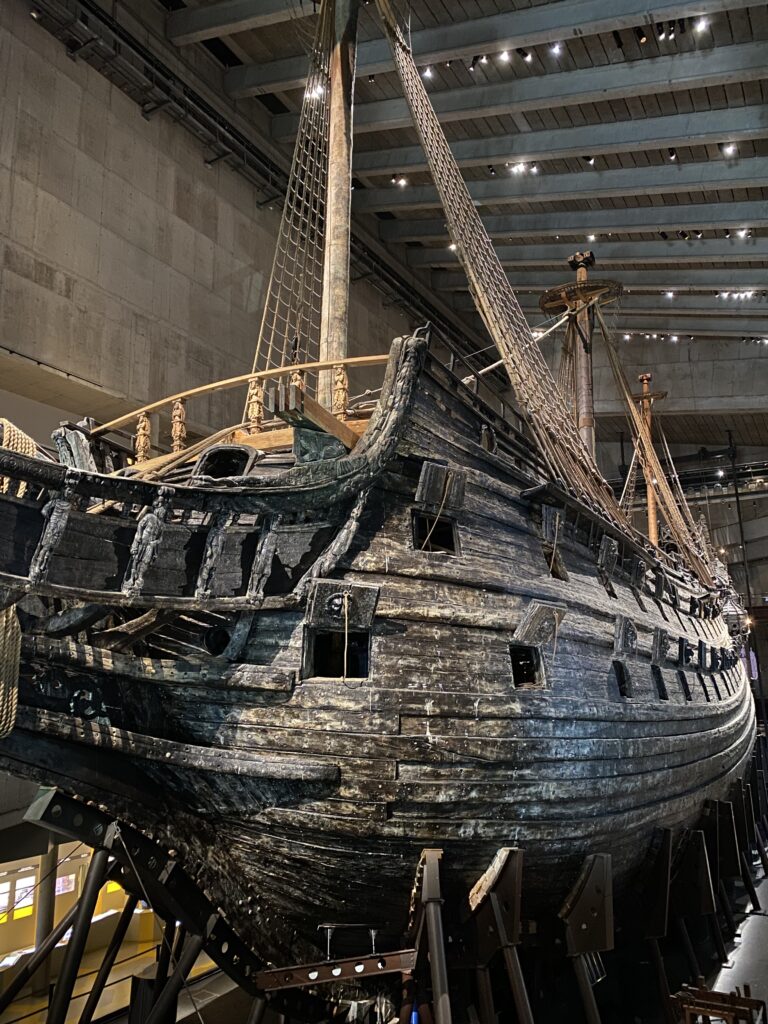
A few years ago, I was working for a client in Stockholm and in some free time, I visited the wreck of the Vasa, the world’s best-preserved 17th-century ship. She’s housed in a museum built specifically around her – enormous and (mostly) intact, after spending nearly 350 years under the sea. I’d known the Vasa’s story for a while and had even used it in workshops, but standing next to the thing itself is different. I found myself looking up at this huge beast of a construction, wondering how many people who were involved in building it knew that it would sink.

tom at the vasa

Understanding why the Vasa sank also gets to something important about how organisations fail.

The Vasa and the King

On 10 August 1628, the Vasa set sail from Stockholm harbour on her maiden voyage as the newest and most expensive ship in the Royal Swedish Navy. Commissioned by King Gustavus Adolphus, she was laden with ornate carvings, towering masts and 64 bronze cannons; one of the most formidable displays of naval power in Europe, and a deliberate statement of Swedish ambition. The crowds who had gathered to watch her depart included plenty of foreign ambassadors; in effect, spies of Sweden’s allies and enemies, there to report back on the launch.

What they witnessed was not what anyone had planned. After sailing roughly 1,300 metres, and still within sight of the king’s palace, a gust of wind caught her sails and she heeled sharply to port. Water rushed in through the many open gunports. Within minutes, the Vasa had sunk to the bottom of the harbour with between 30 and 50 lives lost out of a crew of around 150. The wind that sank her was later estimated at about 8 knots, which is not by any means a strong wind. Subsequent calculations suggest she might even have gone over in a breeze of just 4 knots.

The captain, who survived, was thrown into jail the following morning and a formal inquiry was convened.

Scope Creep and Production Pressure

The Vasa’s instability wasn’t a single mistake. It was the accumulated result of years of changing requirements, “scope creep“, poor coordination, production pressure, and crucially, an organisation in which bad news could not travel upwards.

The ship had started life as something quite different. In January 1625, the King had contracted for four ships: two smaller vessels with keels of around 108 feet, and two larger ones at 135 feet (the keel is the structural backbone running along the bottom of a ship’s hull, from bow to stern, like a spine). Then, in the autumn of that year, the Swedish navy lost ten ships in a storm, and the king ordered the smaller ships to be built first, on an accelerated schedule. The Vasa’s keel was laid in early 1626 as a relatively modest vessel.

What followed was scope creep in its extreme. The king learned that Denmark was building a large warship with two enclosed gun decks (something no Swedish shipbuilder had so far attempted) and ordered the Vasa enlarged to match. The 111-foot keel already in the ground was physically extended: a fourth scarf joint was added, where a traditional ship would have three. The hull was widened, but only in the upper sections, because the keel was already fixed. No formal specifications were drawn up for any of these changes. The lead shipwright, Henrik Hybertsson, who had never built a two-gun-deck ship, appears to have scaled up his original plans by proportion and instinct rather than calculation, partly because, in 1628, there were no known methods for calculating a ship’s centre of gravity or stability characteristics. You found out how a ship sailed by sailing it.

Hybertsson fell seriously ill in 1626 and died in 1627, leaving his assistant Hein Jacobsson to complete the project. At the time of Hybertsson’s death, around 400 people across five different teams were working on the ship with apparently little coordination between them. The armament specification changed repeatedly: the final configuration crammed 24-pound guns onto an upper deck that had been built for lighter 12-pound guns, pushing the centre of gravity higher still. The ornate oak carvings the king had ordered, hundreds of them, added yet more weight above the waterline. You can still see these carvings all over the ship today.

There was also a detail that came to light only after the ship was raised in 1961: the construction teams had used four different rulers, two calibrated in Swedish feet (twelve inches) and two in Amsterdam feet (eleven inches). The resulting asymmetry made the ship heavier to port than to starboard. It is, in a way, a perfect metaphor for the whole project: four groups of people, working on the same ship, without any shared and agreed standard.

The Stability Test 

What makes the Vasa story extra impactful is that the failure wasn’t hidden. Shortly before the maiden voyage, a stability test was conducted in front of Admiral Fleming and the ship’s captain. Thirty men ran back and forth across the upper deck. After just three traversals, the test was stopped because the ship was rocking so violently that those present feared she would capsize on the spot.

However, there was no good solution available. The hold had no room for additional ballast; the shallow keel, a consequence of extending the original 111-foot design, had required extra bracing timbers that filled the space. In any case, had more ballast somehow been added, it would have pushed the lower gunports below the waterline. The ship was, structurally, beyond rescue at the point of launch. When we think of sunk cost or plan continuation bias, this example should loom large.

And yet, the launch went ahead. The shipwright and the shipbuilder, it later emerged, had not been present at the stability test and were never told about the results. The boatswain, Matsson, who had raised concerns about the ship’s ballast, was told by Admiral Fleming: “the shipbuilder has built ships before and you should not be worried.” Matsson’s response, recorded in the subsequent inquiry, was: “God grant that the ship will stand upright on her keel.”

Fleming, for his part, had reportedly lamented after the failed test: “If only the King were here.” It’s a small window into the bind these men were in. The king had ordered the Vasa ready by 25 July; the maiden voyage on 10 August was already more than two weeks late. Failure to launch meant facing the king’s displeasure. Was it better to face the certainty of the King’s wrath, or the potential risk of the ship capsizing?

the vasa

The King’s Power Gradient

The Vasa Museum’s own account of the inquest notes that “it was rarely a good idea to disappoint the king.” That’s an understatement, but it points at something real. When we talk about authority gradients in organisations, we’re often talking about the positional power distance between a frontline worker and a senior manager, for example. The gradient between the people building the Vasa and King Gustav was of a categorically different order. Speaking up against a steep power gradient in a modern workplace is uncomfortable and often carries real risk. Kings were appointed by God. Speaking up against a king, in 1628, was unthinkable.

And yet the dynamic is recognisable. To quote Lars Axelsson, “a problem that stays with whoever discovers it is a problem that remains unknown.” The Vasa’s problems were known – to the boatswain, to the men who ran the stability test, almost certainly to Jacobsson, who had always suspected the Vasa was too narrow. What those problems lacked was a path upward. Every layer of the hierarchy had more reasons to ignore or dismiss the concern rather than pass it on, so the information that could have prevented the disaster never reached anyone with the power and the will to act on it.

The formal inquiry in September 1628 found no one to blame, partly because blame was genuinely difficult to assign: the king had approved all plans and armaments, the shipwright was dead, the admiral had conducted a stability test and still let the ship sail; and partly because the structure of the organisation had distributed responsibility so thoroughly that no single decision looked, in isolation, like the fatal one. That, too, is a pattern worth recognising.

VASA SYNDROME: The organisational pattern in which power gradients, production pressure, and the absence of psychological safety prevent the people doing the work from challenging unrealistic demands, so latent flaws go uncorrected until disaster occurs.

Kessler et al, 2004

Vasa Syndrome:

1: Lack of external learning capability
2: Goal confusion
3: Obsession with speed
4: Feedback system failure
5: Communication barriers
6: Poor organisational memory
7: Top-management meddling

After The Disaster

There is a coda to the story that I find almost as interesting as the disaster itself. Hein Jacobsson – the man who completed the Vasa after Hybertsson’s death – had suspected, even before she was launched, that her proportions were wrong. When he was commissioned to build her sister ship, Äpplet, in 1629, he built her a metre wider. Äpplet went on to serve in the Swedish navy for around 30 years.

The lesson there is not that the builders couldn’t learn. They clearly could, and did. The lesson is what it took to make that learning happen: a catastrophic, public, entirely avoidable disaster, witnessed by thousands. Jacobsson already knew what needed to change. He simply hadn’t felt able to say so with sufficient authority until the failure was so large and so visible that a change of approach was essential. That’s a high price for an organisation to pay for a lesson its own people already knew.

The Vasa Organisational Pattern

When I was in the museum in Stockholm, what struck me most wasn’t the scale of the ship, though she is vast (somewhat bigger than the narrowboats I used to live on!). It was how incredibly grand and unseaworthy she looked, with rows and rows of gundecks, crammed together, apparently very close to the waterline. It looks like a demonstration ship – one designed to satisfy an ego rather than to perform. People had to build it and sign off on it. And the people closest to the work, the ones who could see the issues most clearly, were the ones least able to say anything about them.

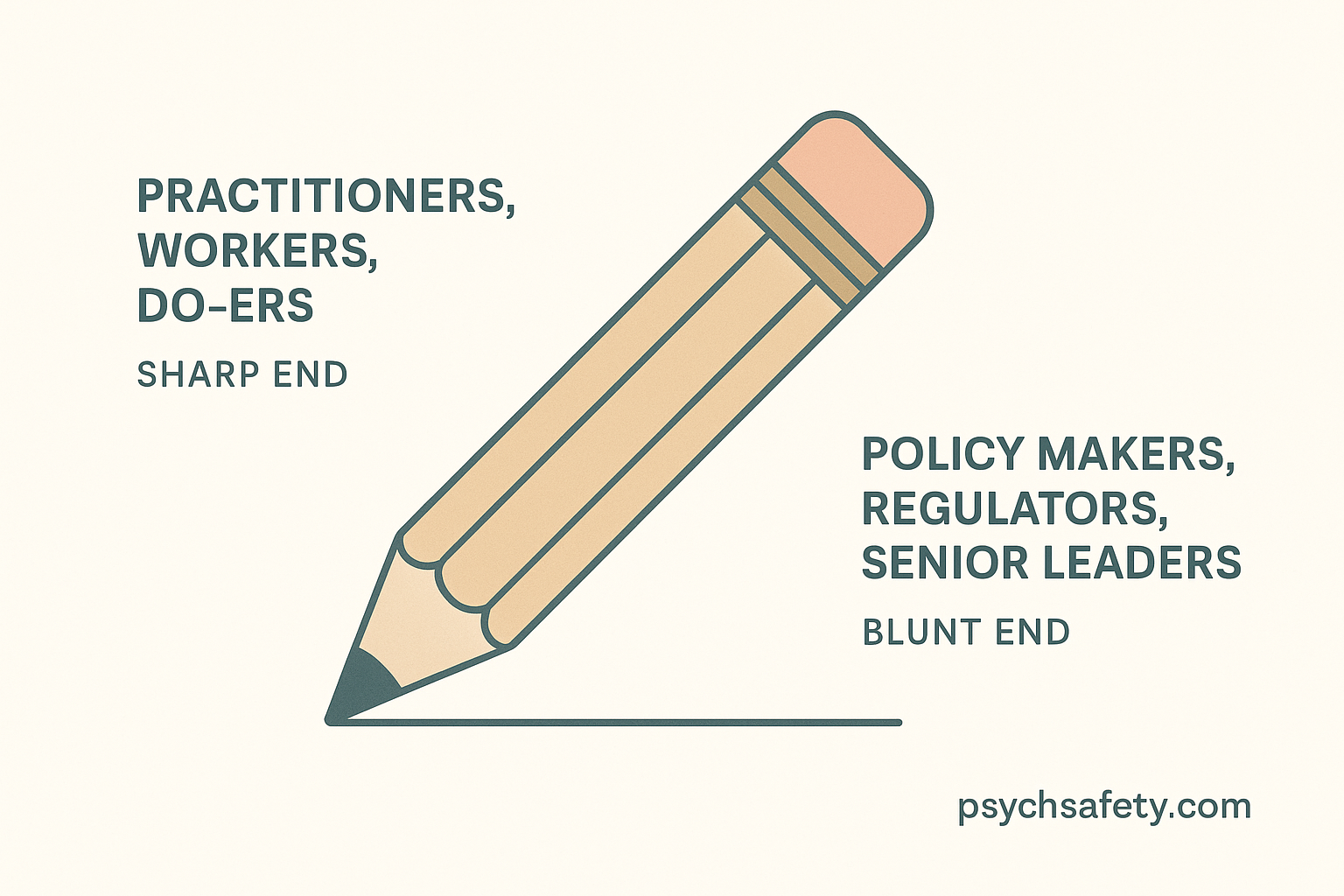
That is the pattern we see repeated all too often in organisations, in workplaces where the distance between the people at the sharp end and the blunt end is large, and where the cost of carrying bad news upward feels higher than the cost of absorbing it quietly. Projects and programmes become “greenwashed”, so everything looks on track for the leadership who are monitoring, whilst those at the sharp end are crucially aware of multiple real and potential failures. Psychological safety is the structural condition that allows that knowledge to move vertically, and problems to be surfaced before they become disasters.

There were many component causes of the Vasa’s demise: changing designs, the mixed measurement systems, the too-heavy guns, the impossible timeline, but ultimately the Vasa sank because the people who knew it would sink didn’t feel able to say so to the people who could have done something about it. 

(Written in collaboration by Tom Geraghty, Bea Poyton and Jade Garratt)

References:

Axelsson, L. (2006) ‘Structure for management of weak and diffuse signals’, in Hollnagel, E., Woods, D.D. and Leveson, N. (eds.) Resilience engineering: concepts and precepts. Aldershot: Ashgate, ch. 10.

Fairley, R.E. (n.d.) Why the Vasa sank: 10 lessons learned. Oregon Graduate Institute. [Unpublished manuscript.]

Hollnagel, E., Woods, D.D. and Leveson, N. (eds.) (2006) Resilience engineering: concepts and precepts. Aldershot: Ashgate.

Kessler, E.H., Bierly, P.E. and Gopalakrishnan, S. (2004) ‘Vasa syndrome: insights from a 17th-century new-product disaster’, IEEE Engineering Management Review, 32(1), pp. 38–48. Available at: https://doi.org/10.1109/EMR.2004.25008

Vasamuseet (no date) The Vasa — history and the inquest. Available at: https://www.vasamuseet.se/en/explore/vasa-history/inquest

Vrak – Museum of Wrecks (2022) Vasa’s sister ship Äpplet discovered. Available at: https://www.vrak.se/en/about-vrak/pressroom/vasas-sister-ship-applet-discovered–world-unique-find/

See how this article connects
Explore its relationships with other ideas in the knowledge network.
Explore in network →

disasterkingpowerpower gradientVASA

Tom Geraghty

Tom Geraghty, co-founder and organisational ecologist. Tom has previously held CTO roles in a range of sectors and holds a degree in Ecology, and postgraduate degrees in business and Global Health. Now studying for a PhD. Email tom@psychsafety.com

Related Articles


Mary Parker Follett
Newsletter  ·  Psychological Safety
Power and Mary Parker Follett
August 26, 2022
conflict
Newsletter  ·  Psychological Safety
Psychological Safety 60: Conflict and Holding Environments
June 6, 2022
hospital ward
Learning from Error, or Punishing It?
Previous Article
Contracting and recontracting
Next Article
  • Subscribe to the Psychological Safety Newsletter

  • psychological safety train the trainer
  • Get Certified! Join online workshops, or explore training and consultancy for leaders, teams and organisations.

    Discover our training options for Human and Organisational Performance and CRM for non-aviation teams.

    If you're a trainer, consultant or facilitator, get certified in our Train the Trainer complete online programme and download the Training Materials for Facilitators and Trainers.

  • psychological safety on-demand training
  • building and maintaining psychological safety for your team
    Download the complete Practitioners' guide to psychological safety
  • psychological safety trainer toolkit
  • Download the Psychological Safety Trainer Toolkit. Containing powerful resources that you can use to deliver your own training and workshops!

  • psych safety logo

    Sponsorship and advertising. Reach over 11,000 weekly readers and 500,000 online visitors with your message in our newsletter.

  • theres no such thing as too much psychological safety
    Grab Psychological Safety Stickers from our Online Shop!
  • Psych Safety Day

    Find out more about our Psych Safety Days - in-person and virtual events to share, learn, and connect with other enthusiasts, practitioners and researchers on psychological safety and related topics.

  • Psychological Safety Knowledge Network

    Use our Psych Safety Semantic Knowledge Map to explore hundreds of articles, papers, resources and tools. 

  • Categories

    • Newsletter
    • Psychological Safety
      • Create and Maintain
      • Human and Organisational Performance (HOP)
      • In Technology
      • Learning and Development
      • Measure
      • Psychological Safety In The Workplace
      • Theory and Research
  • Recent Posts

    • Safety, Stat!
      Safety, Stat!
      June 26, 2026
    • The Strange Confidence of 360 Degree Feedback

      The Strange Confidence of 360 Degree Feedback
      June 25, 2026
    • Reading the air: high and low context communication in teams

      Reading the air: high and low context communication in teams
      June 8, 2026
    • Who gets to decide if psychological safety matters?
      Who gets to decide if psychological safety matters?
      June 5, 2026
    • Accountability
      Accountability
      May 29, 2026
    • Qualitative Measurement of Psychological Safety

      Qualitative Measurement of Psychological Safety
      May 22, 2026
    • The Psych Safety Knowledge Map
      The Psych Safety Knowledge Map
      May 15, 2026
    • Ambiguity, predictability, and psychological safety

      Ambiguity, predictability, and psychological safety
      May 1, 2026
    • The Calculus of Voice
      The Calculus of Voice
      April 23, 2026
    • Contracting and recontracting
      Contracting and recontracting
      April 16, 2026
    • The Vasa
      The Vasa
      April 1, 2026
    • Learning from Error, or Punishing It?
      Learning from Error, or Punishing It?
      March 27, 2026
    • The “Utility” of Psychological Safety
      The “Utility” of Psychological Safety
      March 20, 2026
    • Psychological Flexibility
      Psychological Flexibility
      March 19, 2026
    • Be soft to each other, and hard on the system

      Be soft to each other, and hard on the system
      March 12, 2026
    • "Fake it till you make it"
      "Fake it till you make it"
      March 12, 2026
    • The SANE Effect
      The SANE Effect
      February 20, 2026
    • Learning Teams
      Learning Teams
      January 30, 2026
    • The Tenerife Disaster of 1977: “We're Going”

      The Tenerife Disaster of 1977: “We're Going”
      January 23, 2026
    • ST.R.E.A.M: Status Rules Everything Around Me
      ST.R.E.A.M: Status Rules Everything Around Me
      January 23, 2026
    • Growth Mindset
      Growth Mindset
      January 16, 2026
    • The Streetlight Effect
      The Streetlight Effect
      January 8, 2026
    • The "Fist of Five"
      The "Fist of Five"
      December 19, 2025
    • Psychological Bravery
      Psychological Bravery
      December 18, 2025
    • Psych Safety Book List 2025
      Psych Safety Book List 2025
      December 18, 2025
    • Psych Safety 2025 Unwrapped
      Psych Safety 2025 Unwrapped
      December 15, 2025
    • Plan Continuation Bias
      Plan Continuation Bias
      December 12, 2025
    • Whistleblowing and Psychological Safety
      Whistleblowing and Psychological Safety
      December 4, 2025
    • How Childhood Socioeconomic Status Shapes Psychological Safety and Career Risk-Taking at Work
      How Childhood Socioeconomic Status Shapes Psychological Safety and Career Risk-Taking at Work
      November 27, 2025
    • Safety and the Myth of Self-Reliance
      Safety and the Myth of Self-Reliance
      November 24, 2025
    • The Watermelon Effect and "Greenwashing"

      The Watermelon Effect and "Greenwashing"
      November 7, 2025
    • Individual Resilience
      Individual Resilience
      October 31, 2025
    • Counterfactuals
      Counterfactuals
      October 24, 2025
    • Coaching and Psychological Safety
      Coaching and Psychological Safety
      October 17, 2025
    • Five Ecological Concepts for Working in Organisational Change

      Five Ecological Concepts for Working in Organisational Change
      October 9, 2025
    • The Sharp End & Blunt End of Education
      The Sharp End & Blunt End of Education
      October 3, 2025
    • Forced Vulnerability
      Forced Vulnerability
      September 26, 2025
    • New Sticker Drop! "Zombies Are Scary"
      New Sticker Drop! "Zombies Are Scary"
      September 22, 2025
    • Reflections - Part Four: A Rights-Based Approach

      Reflections - Part Four: A Rights-Based Approach
      September 16, 2025
    • Reflections - Part Three: The Safety to Dissent
      Reflections - Part Three: The Safety to Dissent
      September 12, 2025
    • Reflections - Part Two: Power and Difference
      Reflections - Part Two: Power and Difference
      September 4, 2025
    • The Psychological Safety Trainer Toolkit
      The Psychological Safety Trainer Toolkit
      September 1, 2025
    • Reflections on Psychological Safety: Five Years of Learning
      Reflections on Psychological Safety: Five Years of Learning
      August 29, 2025
    • Not Feeling Seen: Eye Contact and Psychological Safety
      Not Feeling Seen: Eye Contact and Psychological Safety
      August 21, 2025
    • Psychological Safety Isn't Enough
      Psychological Safety Isn't Enough
      August 15, 2025
    • Psych Safety Day / Week 2026
      Psych Safety Day / Week 2026
      August 11, 2025
    • The Amagasaki Disaster
      The Amagasaki Disaster
      August 8, 2025
    • Psychological safety isn't the same for everyone
      Psychological safety isn't the same for everyone
      August 4, 2025
    • Psychological Safety Books for Children
      Psychological Safety Books for Children
      August 1, 2025
    • Carl Rogers, Psychological Safety and Creativity
      Carl Rogers, Psychological Safety and Creativity
      July 25, 2025
    • The State of Psychological Safety Survey: 2025
      The State of Psychological Safety Survey: 2025
      July 19, 2025
    • Barriers to Psychological Safety
      Barriers to Psychological Safety
      July 18, 2025
    • The psychological safety observer effect
      The psychological safety observer effect
      July 11, 2025
    • Practices that Foster Psychological Safety
      Practices that Foster Psychological Safety
      July 4, 2025
    • Feedback in the workplace
      Feedback in the workplace
      June 27, 2025
    • Twitter
    • LinkedIn


Sign up to our newsletter & get weekly insights and research

About

The Psychological Safety Team
Our Mission
Our Core Principles
Privacy Policy
Terms of Business

Learn

Corporate Training
Online Workshops
Newsletter
Professional Certification
Explore our semantic knowledge map

Tools

Tool Kits
Articles
What is Psychological Safety?
The History of Psychological Safety

Get Connected

Contact us
Attend a Meetup
Join the Community
Connect with us on LinkedIn
View our YouTube Channel
© 2025 Iterum Ltd
We support LGBTQ+ rights all year round. But we also celebrate pride too.
We support LGBTQ+ rights all year round. But we also celebrate pride!
Content on this website is CC BY-NC-SA
Written by humans, not by AI