psychological safety

Photo by Joaquin Carfagna from Pexels: https://www.pexels.com/photo/workers-in-reflective-clothing-18111292/

Safety, Stat!

When should Safety intervene on site when it’s not our business? Should we just support our teams by sticking to fixing hazards and unsafe behaviors? Here’s what I mean…  Not long ago, a director lamented, “I want that lead-man to

Read More »
Lens ball with a view over mountains

The Strange Confidence of 360 Degree Feedback

The Strange Confidence of 360 Degree Feedback 360 degree feedback promises that it will offer truth in all directions. It will illuminate blind spots, reveal the development areas people couldn’t see before and unlock potential they didn’t know they had.

Read More »
view from curbar - lots of enclosed fields

Accountability

Many organisations “hold people accountable” by imposing negative consequences for failure. The organisations that actually handle failure best are the ones that make it safe to give an honest account – they foster account-ability. They are not the same thing. They are, in fact, complete opposites.

Read More »

The Psych Safety Knowledge Map

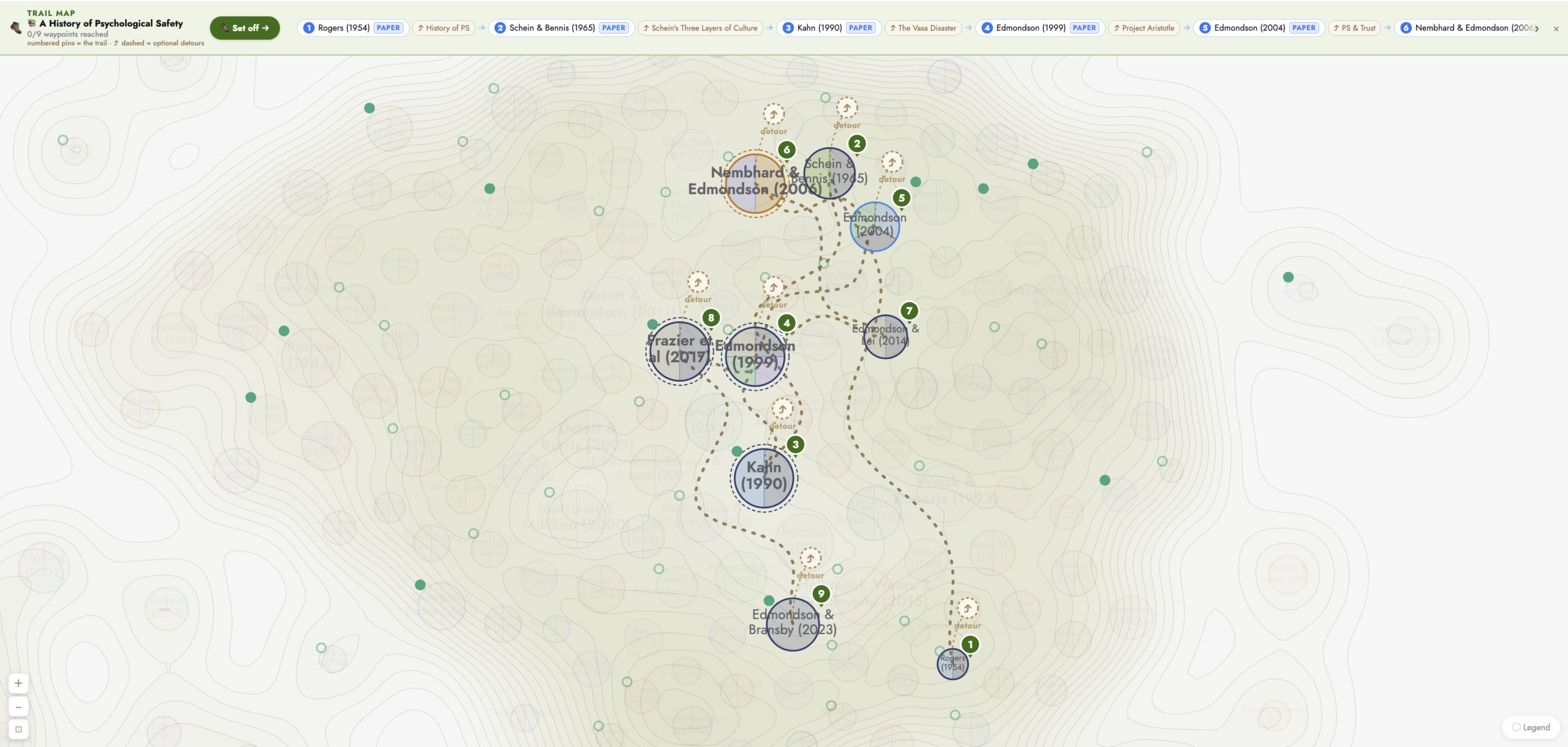
The Psych Safety Knowledge Map We’re super excited to announce that explore.psychsafety.com is now generally available!  For a long time now, we’ve been thinking about a way to make our nearly 300 psychsafety.com articles more easily accessible and searchable in an

Read More »
sign post

The Calculus of Voice

The Calculus of Voice “Between stimulus and response, there is a space. In that space is our power to choose our response. In our response lies our growth and our freedom.”Viktor Frankl, psychiatrist and Holocaust survivor The voice calculus mechanism

Read More »

Contracting and recontracting

Contracting and recontracting A lot of relationship friction comes from faulty assumptions: two (or more) people each operating on their own mental model of what was agreed, who’s responsible for what, and what counts as acceptable, without ever actually comparing

Read More »
hospital ward

Learning from Error, or Punishing It?

The cases of Dr Hadiza Bawa-Garba and RaDonda Vaught Content note: this article discusses the deaths of patients, including a child. Co-created and edited by Jade Garratt and Bea Poyton. Dr Hadiza Bawa-Garba is a British paediatrician. RaDonda Vaught is

Read More »
justice scales

The “Utility” of Psychological Safety

The Futility of Utility If we want to make the argument for psychological safety in most organisations, we often need to speak the language of value. There is genuinely strong evidence that psychological safety is associated with better team performance,

Read More »
Toddler sitting on a Wooden Chair holding a Book

Psychological Flexibility

A while ago I read a post in a parenting forum that struck me for a few reasons. It was by a mum who had taken her daughter to the library, and had watched while her young daughter very politely

Read More »
Abseiling down a waterfall

“Fake it till you make it”

Why “Fake It Till You Make It” Doesn’t Work for Psychological Safety I remember early in a new job – one I was excited about and keen to make my mark in – I made a decision to be honest

Read More »
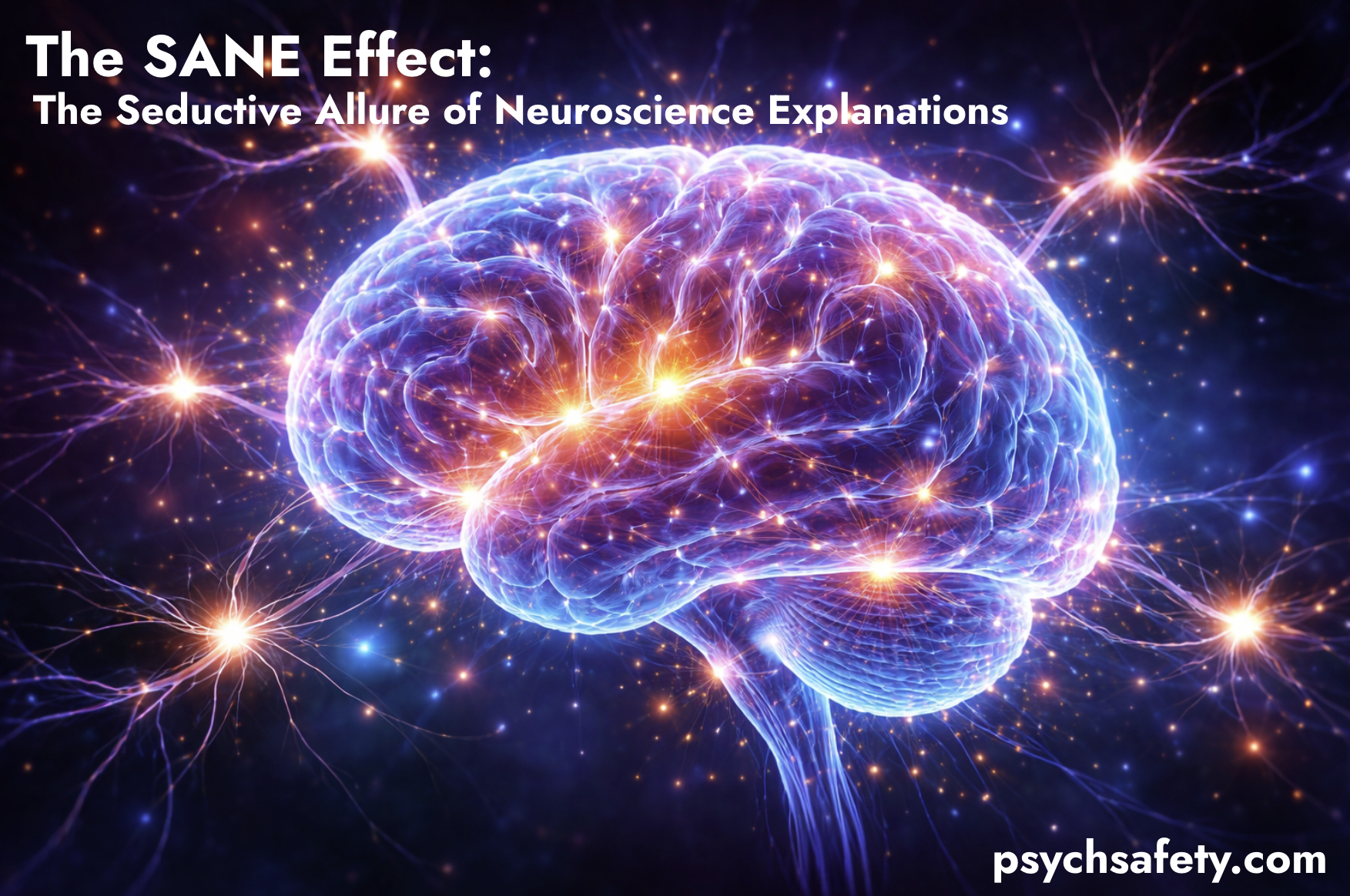
The SANE Effect: the seductive allure of neuroscientific explanations

The SANE Effect

The SANE Effect Spend any time on LinkedIn or other social media, and you may well come across posts and articles mentioning neuroscience or brain science, using neuro- as a prefix to invent terms like “neuroleadership”, or including images of

Read More »
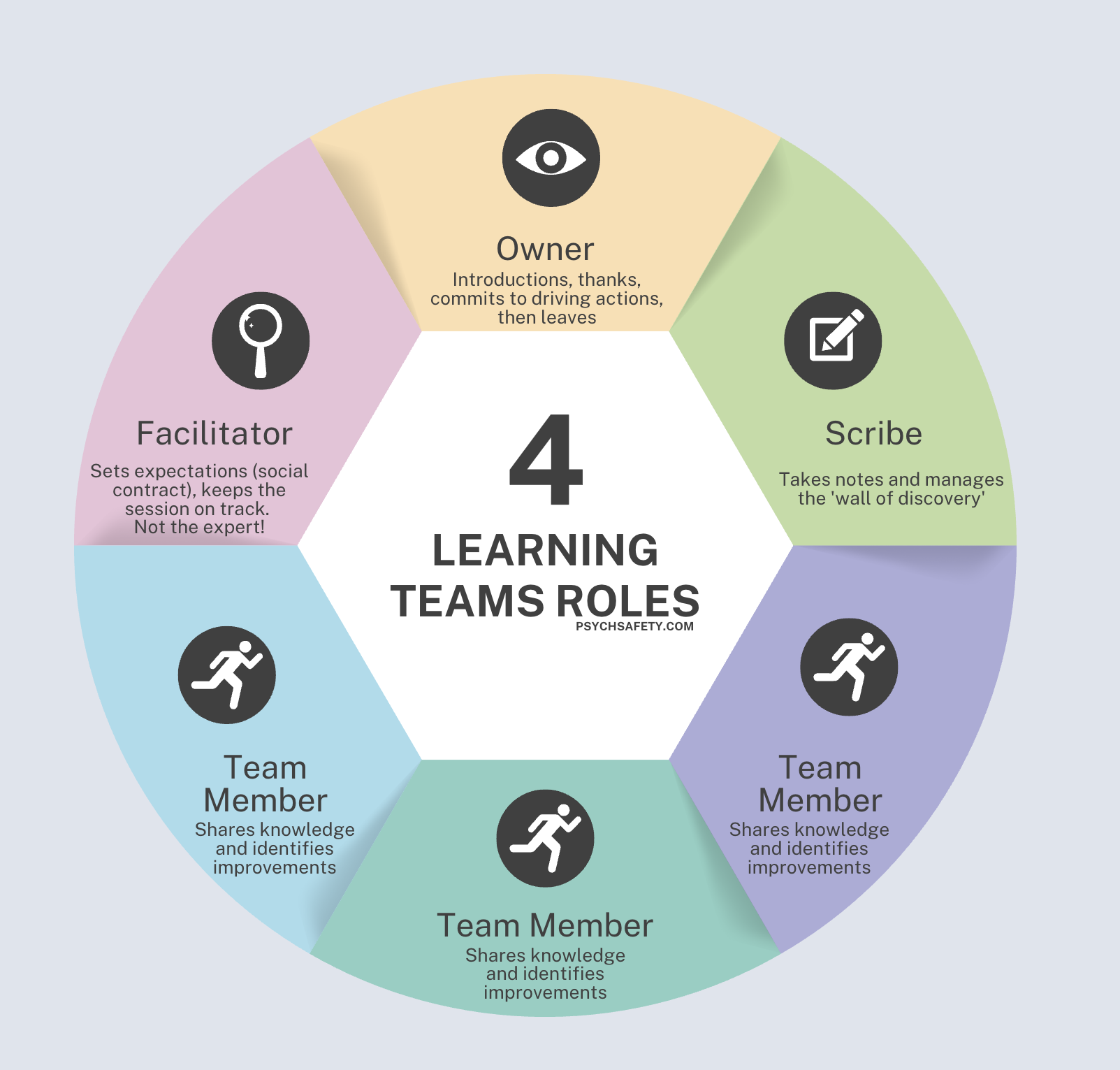
the various roles of a HOP learning team - owner, facilitator, team members

Learning Teams

Learning Teams Often, when we’re trying to improve how work gets done, we start with principles. We agree what we believe in, or are working towards, at a high level, and then figure out how those ideas translate into day-to-day

Read More »
STREAM - status rules everything around me

ST.R.E.A.M: Status Rules Everything Around Me

ST.R.E.A.M: Status Rules Everything Around Me In the classic hip hop track C.R.E.A.M., the great Wu-Tang tell us “Cash Rules Everything Around Me”. Whilst it might sound like the song is glorifying money, it’s actually a commentary on how economic

Read More »
growth mindset and psychological safety

Growth Mindset

Growth Mindset When American psychologist Carol Dweck published her book “Mindset” in 2006 it made waves in the education world and beyond. Drawing on her work developing mindset theory, it offered a shift in perspective: instead of assuming that someone’s

Read More »
The streetlight effect

The Streetlight Effect

The Streetlight Effect Measuring the really important stuff is hard. How do we measure inclusion, or safety, or happiness? We can probably all agree that these things matter, but when it comes to measuring them, where do we start? In

Read More »
the fist of five for psychological safety

The “Fist of Five”

The problem with the “Fist to Five” for psychological safety. Often, with good intent, we find facilitators and teams adopting a practice called “Fist of Five”, where, at the start of a meeting or workshop, participants are asked to hold

Read More »
Erving Goffman wrote in “The Presentation of Self in Everyday Life” (1959, p243): “…there is no interaction in which the participants do not take an appreciable chance of being slightly embarrassed or a slight chance of being deeply humiliated. Life may not be much of a gamble, but interaction is.''

Psychological Bravery

The trope of “psychological bravery” crops up a lot. But what does it mean? Typically, “psychological bravery” is an attempt to reframe: instead of focusing on creating psychologically safe environments, we should simply encourage individuals to be braver. In other

Read More »
mary parker follett ideas

Psych Safety Book List 2025

Psych Safety Book List 2025 You know we love a good book, and we love sharing them even more, and this year we’ve been treated to some brilliant recommendations from members of the Psych Safety community. Thank you for keeping our

Read More »
reduce plan continuation bias with these 6 practices

Plan Continuation Bias

Plan Continuation Bias, or “Get-There-Itis” I got pretty sick this week. I was wiped out with a nasty bout of tonsillitis – high temperature, exhausted and felt awful. The doctor put me on strong antibiotics, painkillers, and told me, in

Read More »
justice scales

Whistleblowing and Psychological Safety

Whistleblowing and Psychological Safety: Not the Same Thing By Jade Garratt When we explain our work to people who’ve never heard of psychological safety, they sometimes say, “Oh, like whistleblowing?” It’s an understandable mix-up – both involve speaking up about things

Read More »