• Psychological Safety
  • Organisational Training
    • – Ignite: Senior Leaders
    • – Impact: Team Workshop
    • – Delivering Feedback
    • Culture and Neurodiversity
    • – CRM for Non-Aviation Teams
    • – HOP: Human and Organisational Performance
  • Online Workshops
    • – Train the Trainer
    • – Fundamentals
    • – Practices
    • – Leadership
    • – Advanced
    • – Measurement
    • – Workshop Facilitation
    • – HOP
    • – Delivering Feedback
  • Resources
    • – Tool Kits
    • – Free Resources
    • – Newsletter
    • – Articles
    • – Research
    • – Shop
    • – Community
    • – Practices
    • – What is Psychological Safety?
  • About Us
  • Contact
  • Search
  • Tool Kits
    • Action Pack
    • Trainer Toolkit
    • Practitioner Bundle
    • Practice Playbook: Feedback​
    • Practice Playbook: Technology​
    • Practice Playbook: Inclusion​
    • Practice Playbook: Education​
    • Practice Playbook: Healthcare​
  • Organisational Training
    • Ignite for Senior Leaders
    • Impact Team Workshop
    • Management Masterclass
    • Delivering Effective Feedback
    • Cultural and Neurodiversity
    • HOP: Human and Organisational Performance
    • CRM for Non-Aviation Teams
    • Train the Trainer
  • Online Workshops
    • Complete Online Course
    • Psychological Safety Fundamentals
    • Practice Masterclass
    • Leadership & Management
    • Advanced Psychological Safety
    • Measuring Psychological Safety
    • Workshop Design and Facilitation
    • HOP Fundamentals
    • Delivering Effective Feedback
psych safety logo white
  • Resources
    • Tool Kits
    • Free Resources
    • Newsletter
    • Research
    • Shop
    • Podcasts & Talks
    • Videos
    • Community
    • Events & Psych Safety Days
  • Articles
    • Search
    • What is Psychological Safety?
    • The History of Psychological Safety
    • Psychological Safety Practices
    • Psychological Safety In The Workplace
    • Research
    • Measure Psychological Safety
    • Human Organisational Performance (HOP)
  • The Psych Safety Team
    • Contact Us
    • About The Team
    • Tom Geraghty
    • Jade Garratt
  • Tool Kits
    • Action Pack
    • Trainer Toolkit
    • Practitioner Bundle
    • Practice Playbook: Feedback​
    • Practice Playbook: Technology​
    • Practice Playbook: Inclusion​
    • Practice Playbook: Education​
    • Practice Playbook: Healthcare​
  • Organisational Training
    • Ignite for Senior Leaders
    • Impact Team Workshop
    • Management Masterclass
    • Delivering Effective Feedback
    • Cultural and Neurodiversity
    • HOP: Human and Organisational Performance
    • CRM for Non-Aviation Teams
    • Train the Trainer
  • Online Workshops
    • Complete Online Course
    • Psychological Safety Fundamentals
    • Practice Masterclass
    • Leadership & Management
    • Advanced Psychological Safety
    • Measuring Psychological Safety
    • Workshop Design and Facilitation
    • HOP Fundamentals
    • Delivering Effective Feedback
psych safety logo white
  • Resources
    • Tool Kits
    • Free Resources
    • Newsletter
    • Research
    • Shop
    • Podcasts & Talks
    • Videos
    • Community
    • Events & Psych Safety Days
  • Articles
    • Search
    • What is Psychological Safety?
    • The History of Psychological Safety
    • Psychological Safety Practices
    • Psychological Safety In The Workplace
    • Research
    • Measure Psychological Safety
    • Human Organisational Performance (HOP)
  • The Psych Safety Team
    • Contact Us
    • About The Team
    • Tom Geraghty
    • Jade Garratt
Human Organisational Performance (HOP)  ·  Newsletter  ·  Psychological Safety  ·  Psychological Safety In The Workplace

How We Respond Matters

January 31, 2025 • by Jade Garratt

The Speaking up Myth

By Jade Garratt

In the world of psychological safety, we focus a lot, maybe even too much, on the speaking up side of the equation. How do we make sure people speak up with their ideas, questions, concerns and mistakes?

But this puts the onus on others to do the speaking up, and undervalues the role we play in effectively listening.

Because the crux of psychological safety is that it’s less about what people say and more about how their words are received, and how they predict they will be received. In other words, it doesn’t matter how many times you tell people to speak up, if the way you respond, the way you have responded in the past, or the way they predict you will respond is by punishing, blaming or humiliating. 

And note, words like ‘punishment’ and ‘humiliation’ are quite strong, and tend to bring to mind something overt and extreme, like being yelled at or hauled into a disciplinary meeting. That’s not necessarily the case. The ‘punishment’ we fear might be something far subtler but sometimes just as scary – perhaps disapproval that leads to being overlooked for future opportunities, reputational damage or social ostracisation within the team. 

This can be hard to accept. It can feel particularly frustrating if the people in our teams are reluctant to speak up for reasons unrelated to our behaviour, but because of ways they have been treated in the past. This is why psychological safety matters so much – the way we act now with our team members, our colleagues and even our friends and families will have ripple effects and repercussions well beyond our interactions with them in the moment.

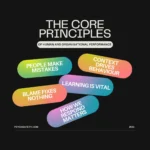
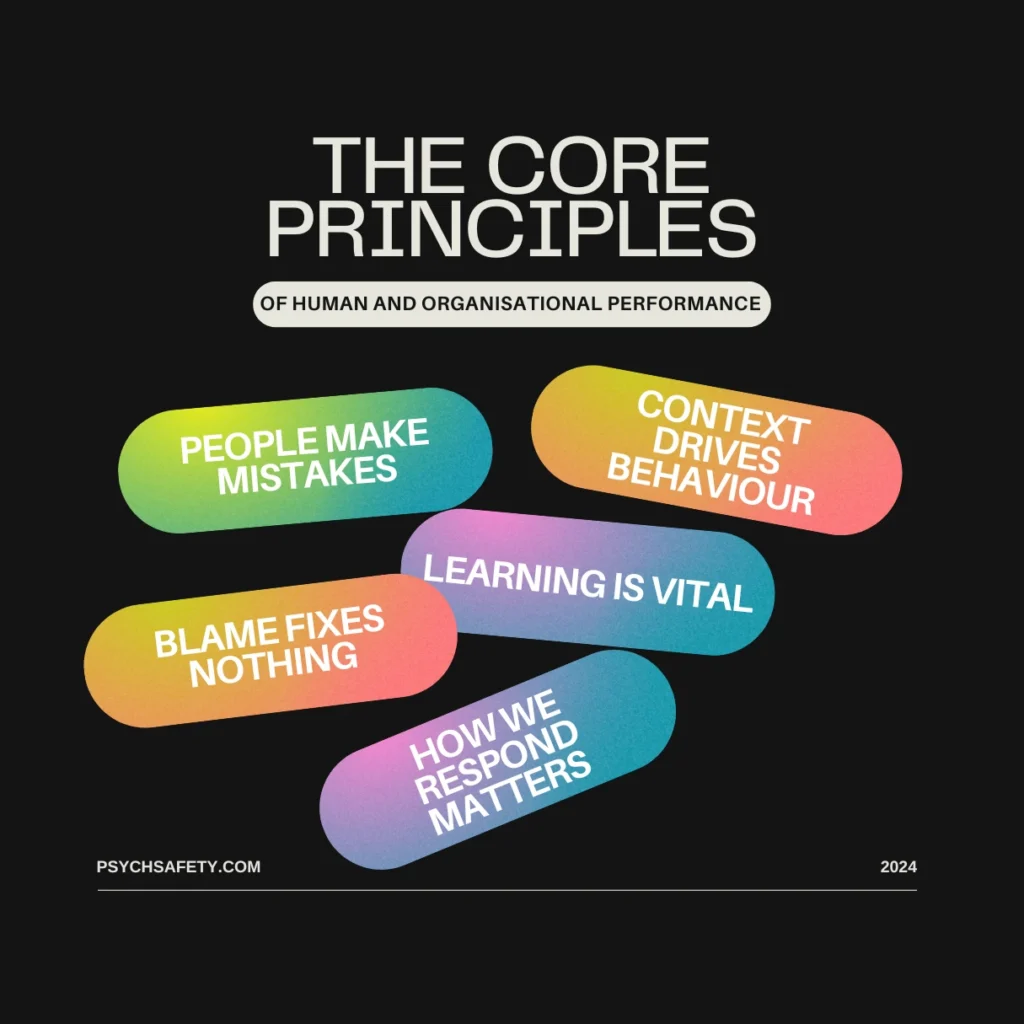
HOP core principles
The Core Principles of Human and Organisational Performance

What we can do is recognise the crucial role we play in supporting others to speak up now and in the future, with us and others. In the language of Human and Organizational Performance, how we respond matters. 

Managing our Responses

It’s easy to assume that you’re doing this already. Easy to think, I’m a decent person, a good leader, an approachable colleague, of course people will feel safe speaking up when I’m around. But how do we really know that?

How many of us can say, hand on heart, that we have never fired off a snappy email in frustration? Have never shown our irritation when someone asks a question that they “should” know the answer to by now? Have never been passive aggressive (or aggressive aggressive) when someone criticises our approach? It’s our reactions in these moments, when we might be tired, distracted or overwhelmed, that matter just as much as how we respond “on a good day.”

Photo by Yan Krukau

There are other times when we just misjudge how we come across. Maybe that email you sent in a hurry was intended to be concise and direct, but came across to the recipient as curt. And there are even more hidden aspects to this too – how confident can we be that the ways we respond to each other are not influenced by preconceptions, stereotypes and unconscious biases? 

None of us can guarantee that we never make mistakes, or never communicate badly. We all also carry unconscious biases and preconceptions that shape how we interact. Even with the best of intentions, we will still, sometimes at least, get it wrong. But we can be sure that if we’re not looking after ourselves and our emotions, and developing more awareness of our triggers, our behaviours and their impact, then we’re likely to mess up a lot more.  

Doing the Work

“The process of becoming a leader is similar, if not identical, to becoming a fully integrated human being.” – Warren Bennis

The thing about building psychological safety, and the thing about becoming a great colleague, leader and human being, is it’s an ongoing process. We are never “done”. 

It means reflecting on our behaviours, asking for feedback as to how we’ve affected others and listening to it. It means working on our communication so that our impact is as close as possible to our intention. It means learning to take a breath when we hear something unexpected or unwelcome, and managing our response so that we’re not shutting down future opportunities to hear someone’s voice. 

The words of Viktor Frankl, psychiatrist and Holocaust survivor, are a powerful reminder of this: “Between stimulus and response, there is a space. In that space is our power to choose our response. In our response lies our growth and our freedom.”

We don’t need to be perfect, but we do need to be humble, apologise when we mess up, and commit to doing better next time.  We’ll never build psychological safety if we’re not willing to do some work on ourselves too. 

Related Reading:

Human and Organisational Performance
How you respond matters
The Seven Deadly Sins of Psychological Safety
Being Approachable
Leadership and Management
Edgar Schein’s Humble Inquiry
Hard to Say I’m Sorry
Why Should We Create Psychologically Safe Workplaces?
Non-Violent Communication (or “Giraffe Language”)
Edgar Schein’s Three Layers of Organisational Culture
Top 10 Ways to Foster Psychological Safety in the Workplace


Psychological Safety Train the Trainer Online Course

Open Enrolment Online Workshops

Booking now for 10th – 27th March 2025

Looking to deepen your expertise in psychological safety—whether for your team, your organisation, or your own practice? Our flagship Complete Psychological Safety Course: Train the Trainer is designed for leaders, trainers, and consultants who want to create safer, more effective workplaces.

This flexible programme consists of six interactive 2.5-hour online workshops, each offering a different lens on how to understand, foster, build, maintain, and measure psychological safety—as well as how to inspire others to do the same. You can join individual sessions relevant to your role or take the full programme to gain a comprehensive Train the Trainer package.

Whether you’re:

  • A leader or manager looking to foster a high-performing, open culture in your organisation,
  • A team member wanting to integrate psychological safety into all aspects of your work
  • An internal trainer or facilitator developing teams and embedding psychological safety across your workplace, or
  • An independent coach or consultant wanting to deliver psychological safety training for your own clients,

… this programme gives you the practical tools, expert guidance, and real-world applications to make an impact.

Secure your spot today and start building psychologically safer, more inclusive spaces for meaningful work.

All our workshops provide certificated CPD hours and Credly badges to evidence your professional development.

Find out more and book here


Work as Imagined vs Work as Done

Psychological Safety in Practice

Hindsight Magazine

Issue 36 of HindSight is out now, and worth a read. HindSight covers human and organisational factors in operations, in aviation, maritime, rail, healthcare and elsewhere. There are some great articles in here from a wide range of folks, and I wanted to draw out this quote from Alex Bristol, CEO of Skyguide, which sadly has increased relevance after yesterday’s crash in Washington. 

“Safety-critical roles depend not only on the quality of the tools but also on the communication among teams and in the organisation. We rely on both formal and informal channels to keep everyone aware of the current state of operations. It’s essential that controllers and engineers feel safe to report issues, trusting that their voices will be heard.” 


The SAFE Leader Podcast

Thanks so much to Mark McBride-Wright for inviting me onto the SAFE Leader podcast to talk about making psychological safety practices accessible globally, not just in wealthy countries. We also talked about the need for more research and application of psychological safety in non-western, non-white collar, more diverse contexts. 


Work as imagined vs Work as Done

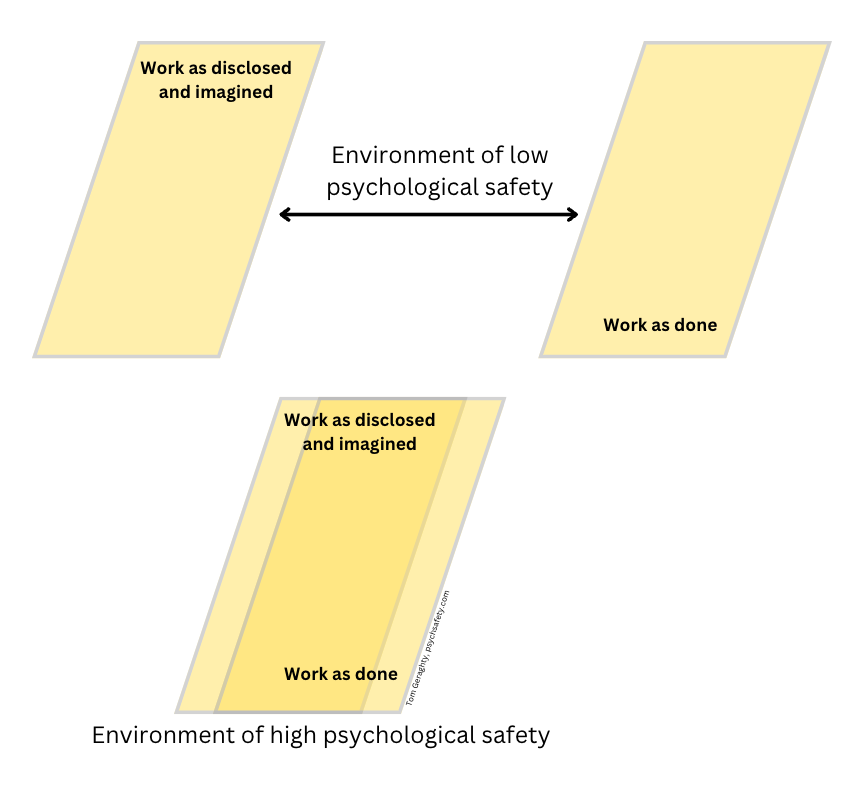
We’ve covered WAI vs WAD, and the different archetypes of work, previously. And I recently recorded a video about WAI/WAD too. I wanted to highlight this excellent example in practice by Claire Cox, which echoes so much of our work with healthcare, particularly maternity departments, who find that policies, SOPs and guidance documents don’t reflect reality. In fact in practice, they often contradict each other – which means that it’s impossible for staff not to violate “Work As Prescribed”, and thus if something goes wrong, the finger of blame immediately points at them for not following procedure (despite it being impossible).

work as done vs work as imagined

Closing the WAI / WAD gap.


This week’s poem:

First they came, a poetic form of 1946 post-war prose by Martin Niemöller

First they came for the Communists
And I did not speak out
Because I was not a Communist
Then they came for the Socialists
And I did not speak out
Because I was not a Socialist
Then they came for the trade unionists
And I did not speak out
Because I was not a trade unionist
Then they came for the Jews
And I did not speak out
Because I was not a Jew
Then they came for me
And there was no one left
To speak out for me


There are many different versions of this, because Martin Niemöller didn’t actually write it. Instead it’s based on his many impromptu public speeches. Martin Niemöller (1892–1984) was a prominent Lutheran pastor in Germany. Although he initially aligned himself with many far-right and Nazi-leaning ideas in the late 1920s and early 1930s, Niemöller became an outspoken critic of Adolf Hitler after Hitler assumed power in 1933 and Niemöller witnessed the true impact of these ideas. This resistance led to Niemöller spending the final eight years of the Nazi regime in prison and concentration camps. After the war ended, Niemöller often spoke of his own early complicity in Nazism and his eventual change of heart.


inclusionmanagementpsychological safetyspeaking up

Jade Garratt

Jade is all about crafting inclusive, healthy and psychologically safe educational environments that allow both educators and students to thrive. With 15 years of experience spanning classroom teaching, the charitable sector, higher education, and the private sector, she brings a unique blend of insights to the table. Trust, openness, and mutual respect are the cornerstones of her educational philosophy. Initially, Jade dedicated five years to teaching and middle leadership in schools in challenging contexts, alongside her studies for a Master’s in Educational Leadership. She then transitioned to coaching and leadership development with Teach First, a UK educational charity and social movement. More recently, she held a senior position in educational enhancement at the University of Nottingham. Her doctoral research focuses on the impact of students’ educational backgrounds on their university experience, through a social justice lens. With a Physics degree from Oxford University, a Master’s Degree in Educational Leadership, and ongoing PhD research in Educational Practice at the University of Nottingham, Jade’s passion for education is at the core of her work. She aims to ensure that everyone has the opportunity to succeed in a supportive environment. Her diverse expertise and commitment make her a valuable member of our team and the broader educational community

Related Articles


Create and Maintain  ·  Psychological Safety  ·  Psychological Safety In The Workplace
Seven Powerful Ways to Build Psychological Safety at Work
September 25, 2019
psychological safety 101 newsletter
Newsletter  ·  Psychological Safety  ·  Psychological Safety In The Workplace
Issue 150: Celebrating Three Years of the Psychological Safety Newsletter
March 1, 2024
Ikigai
Ikigai
Previous Article
SAFETY model - Dan Radecki
The S.A.F.E.T.Y.™ Model: Neuroscience, Needs, and Psychological Safety
Next Article
  • Subscribe to the Psychological Safety Newsletter

  • psychological safety train the trainer
  • Get Certified! Join online workshops, or explore training and consultancy for leaders, teams and organisations.

    Discover our training options for Human and Organisational Performance and CRM for non-aviation teams.

    If you're a trainer, consultant or facilitator, get certified in our Train the Trainer complete online programme and download the Training Materials for Facilitators and Trainers.

  • human and organisational performance training
  • building and maintaining psychological safety for your team
    Download the complete Practitioners' guide to psychological safety
  • psychological safety trainer toolkit
  • Download the Psychological Safety Trainer Toolkit. Containing powerful resources that you can use to deliver your own training and workshops!

  • psych safety logo

    Sponsorship and advertising. Reach over 11,000 weekly readers and 500,000 online visitors with your message in our newsletter.

  • theres no such thing as too much psychological safety
    Grab Psychological Safety Stickers from our Online Shop!
  • Psych Safety Day

    Find out more about our Psych Safety Days - in-person and virtual events to share, learn, and connect with other enthusiasts, practitioners and researchers on psychological safety and related topics.

  • Categories

    • Newsletter
    • Psychological Safety
      • Create and Maintain
      • Human Organisational Performance (HOP)
      • In Technology
      • Learning and Development
      • Measure
      • Psychological Safety In The Workplace
      • Theory and Research
    • Random
  • Recent Posts

    • ST.R.E.A.M: Status Rules Everything Around Me

      ST.R.E.A.M: Status Rules Everything Around Me
      January 23, 2026
    • Growth Mindset
      Growth Mindset
      January 16, 2026
    • The Streetlight Effect
      The Streetlight Effect
      January 8, 2026
    • The "Fist of Five"
      The "Fist of Five"
      December 19, 2025
    • Psychological Bravery
      Psychological Bravery
      December 18, 2025
    • Psych Safety Book List 2025
      Psych Safety Book List 2025
      December 18, 2025
    • Psych Safety 2025 Unwrapped
      Psych Safety 2025 Unwrapped
      December 15, 2025
    • Plan Continuation Bias
      Plan Continuation Bias
      December 12, 2025
    • Whistleblowing and Psychological Safety

      Whistleblowing and Psychological Safety
      December 4, 2025
    • How Childhood Socioeconomic Status Shapes Psychological Safety and Career Risk-Taking at Work
      How Childhood Socioeconomic Status Shapes Psychological Safety and Career Risk-Taking at Work
      November 27, 2025
    • Safety and the Myth of Self-Reliance
      Safety and the Myth of Self-Reliance
      November 24, 2025
    • The Watermelon Effect and "Greenwashing"

      The Watermelon Effect and "Greenwashing"
      November 7, 2025
    • Individual Resilience
      Individual Resilience
      October 31, 2025
    • Counterfactuals
      Counterfactuals
      October 24, 2025
    • Coaching and Psychological Safety
      Coaching and Psychological Safety
      October 17, 2025
    • Five Ecological Concepts for Working in Organisational Change

      Five Ecological Concepts for Working in Organisational Change
      October 9, 2025
    • The Sharp End & Blunt End of Education
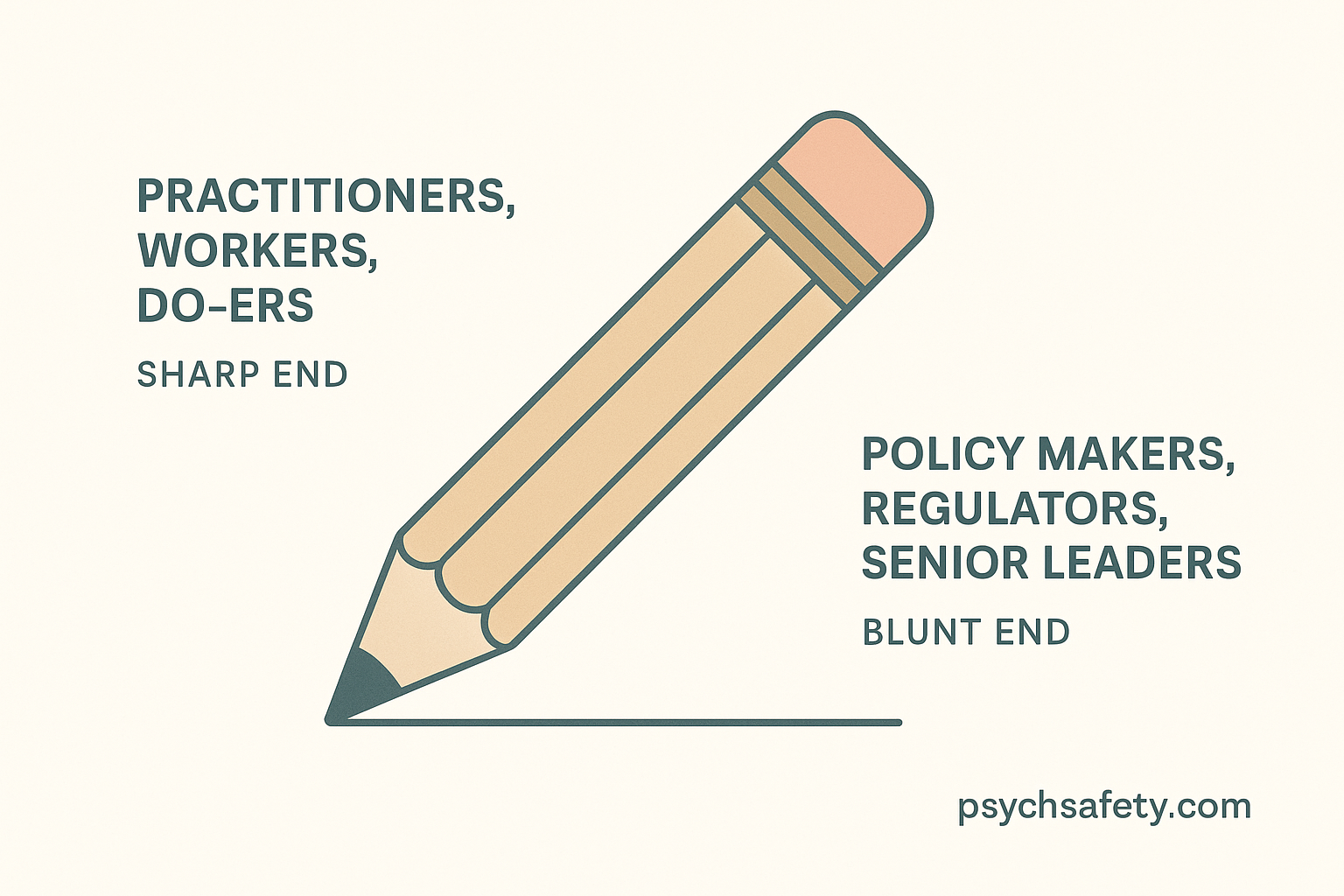
      The Sharp End & Blunt End of Education
      October 3, 2025
    • Forced Vulnerability
      Forced Vulnerability
      September 26, 2025
    • New Sticker Drop! "Zombies Are Scary"
      New Sticker Drop! "Zombies Are Scary"
      September 22, 2025
    • Reflections - Part Four: A Rights-Based Approach

      Reflections - Part Four: A Rights-Based Approach
      September 16, 2025
    • Reflections - Part Three: The Safety to Dissent
      Reflections - Part Three: The Safety to Dissent
      September 12, 2025
    • Reflections - Part Two: Power and Difference
      Reflections - Part Two: Power and Difference
      September 4, 2025
    • The Psychological Safety Trainer Toolkit
      The Psychological Safety Trainer Toolkit
      September 1, 2025
    • Reflections on Psychological Safety: Five Years of Learning
      Reflections on Psychological Safety: Five Years of Learning
      August 29, 2025
    • Not Feeling Seen: Eye Contact and Psychological Safety
      Not Feeling Seen: Eye Contact and Psychological Safety
      August 21, 2025
    • Psychological Safety Isn't Enough
      Psychological Safety Isn't Enough
      August 15, 2025
    • Psych Safety Day / Week 2026
      Psych Safety Day / Week 2026
      August 11, 2025
    • The Amagasaki Disaster
      The Amagasaki Disaster
      August 8, 2025
    • Psychological safety isn't the same for everyone
      Psychological safety isn't the same for everyone
      August 4, 2025
    • Psychological Safety Books for Children

      Psychological Safety Books for Children
      August 1, 2025
    • Psychological Safety and Creativity
      Psychological Safety and Creativity
      July 25, 2025
    • The State of Psychological Safety Survey: 2025
      The State of Psychological Safety Survey: 2025
      July 19, 2025
    • Barriers to Psychological Safety
      Barriers to Psychological Safety
      July 18, 2025
    • How you respond matters.
      How you respond matters.
      July 11, 2025
    • Practices that Foster Psychological Safety
      Practices that Foster Psychological Safety
      July 4, 2025
    • Feedback in the workplace
      Feedback in the workplace
      June 27, 2025
    • Psych Safety Day 2025
      Psych Safety Day 2025
      June 21, 2025
    • Job Security and Psychological Safety
      Job Security and Psychological Safety
      June 20, 2025
    • How familiar are people with the concept of psychological safety?
      How familiar are people with the concept of psychological safety?
      June 13, 2025
    • Learning at Psych Safety
      Learning at Psych Safety
      June 13, 2025
    • Why do We Foster Psychological Safety?
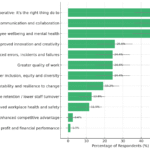
      Why do We Foster Psychological Safety?
      June 6, 2025
    • Psychological Safety in Aviation - Special Edition
      Psychological Safety in Aviation - Special Edition
      May 30, 2025
    • Rebuilding Psychological Safety When It's Broken
      Rebuilding Psychological Safety When It's Broken
      May 30, 2025
    • Just Culture
      Just Culture
      May 23, 2025
    • Transactional Analysis
      Transactional Analysis
      May 15, 2025
    • Comfort vs Need
      Comfort vs Need
      May 9, 2025
    • Sociological Safety
      Sociological Safety
      May 2, 2025
    • Humour and Psychological Safety
      Humour and Psychological Safety
      May 1, 2025
    • Safety-Organised Criticality
      Safety-Organised Criticality
      April 25, 2025
    • Leaders are not solely responsible for psychological safety.
      Leaders are not solely responsible for psychological safety.
      April 21, 2025
    • Psychological Safety in Our Personal Lives

      Psychological Safety in Our Personal Lives
      April 17, 2025
    • The Organisational Fabric of Psychological Safety

      The Organisational Fabric of Psychological Safety
      April 10, 2025
    • Colution
      April 7, 2025
    • All Feedback Is Subjective
      All Feedback Is Subjective
      April 4, 2025
    • Micromanagement
      Micromanagement
      March 21, 2025
    • Twitter
    • LinkedIn


Sign up to our newsletter & get weekly insights and research

About

The Psychological Safety Team
Our Mission
Our Core Principles
Privacy Policy
Terms of Business

Learn

Corporate Training
Online Workshops
Newsletter
Professional Certification

Tools

Tool Kits
Articles
What is Psychological Safety?
The History of Psychological Safety

Get Connected

Contact us
Attend a Meetup
Join the Community
Connect with us on LinkedIn
View our YouTube Channel
© 2025 Iterum Ltd
We support LGBTQ+ rights all year round. But we also celebrate pride too.
We support LGBTQ+ rights all year round. But we also celebrate pride!
Content on this website is CC BY-NC-SA
Written by humans, not by AI