psychological safety

harvesting wheat in summer

Telling the boss bad news twice.

Telling the boss bad news twice. Soon after I graduated from university with my degree in ecology, I got a job as an Experimentalist at Jealott’s Hill Research Station, Berkshire. I worked in a department called “Weed Science” (yes, it does

Read More »
ivory tower of academia

Can Workplaces Have Too Much Psychological Safety?

Team performance isn’t the only reason that we foster psychological safety. We also do it because we want people to feel fulfilled in their jobs, we don’t want people to leave a team because they don’t feel included, we want people to experience less unnecessary stress and have greater mental wellbeing, we want to foster greater diversity and inclusion. Ultimately, we foster psychological safety because it’s fundamentally the right thing to do. 

Read More »

Crew Resource Management and Psychological Safety

Crew Resource Management (CRM) and the Centrality of Psychological Safety Crew Resource Management (CRM) is widely lauded as one of the great breakthroughs in aviation safety. Before its inception, many accidents stemmed not from technical failures alone but from flawed

Read More »
psychological safety word cloud

Psychological Safety in 2023: unwrapped!

Psychological Safety in 2023 Thanks so much for all your support, feedback, encouragement, ideas, insights and collaboration over 2023! It’s genuinely a privilege to be able to do this work, and I appreciate every single one of you. I recently

Read More »
The theory of constraints

The Theory of Constraints

The Theory of Constraints (ToC) A long time ago, I read a book that profoundly changed the way I think about work. That book was The Goal, written by Eli Goldratt in 1984, The story revolves around Alex Rogo, a

Read More »
Photo by An Lê Khánh on Unsplash

The importance of safe-to-fail wargames

Guest post by Nick Drage, Strategy Lead and Game Designer at Path Dependence Limited, co-author of “The Handbook of Cyber Wargames: Wargaming the 21st Century”. At its most abstract level a wargame is a “representation of conflict or competition in

Read More »
causal pies

Retrospectives

Learning From Work In the spirit of looking back and learning, I thought it’d be nice to dive into a few different practices of learning from the work we do. In this issue, we’re going to have a look at

Read More »
selection pressure

Selection Pressure and Psychological Safety

Selection Pressure and Psychological Safety Why has it taken so long for some industries to recognise the importance of psychological safety, whilst others have been doing it for decades? One possible answer: selection pressure. Over the past few decades, the

Read More »
The challenger explosion

The Challenger Disaster: Normalisation of Deviance

The Challenger Disaster: AKA The Normalisation of Risk In previous articles we’ve differentiated error into three types: slips and lapses, mistakes, and violations. This time, we’re exploring a certain type of violation called the “normalisation of deviance”, a term coined

Read More »
social gradient of health

Good Management Saves Lives

The Whitehall Studies and The Social Gradient of Health The relationship between seniority/status and psychological safety is strong. In general, we know that people holding more senior and higher status roles often feel safer speaking up in groups, and those

Read More »
The first organisation chart

The First Organisational Chart

The First Org Chart In 1855, Brigadier General Daniel McCallum, later to become a Civil War officer renowned for “strict precision and stern discipline” as well as for his innovative engineering, created the world’s first organisational chart. This chart was

Read More »
audre lorde questionnaire to oneself

15/5 Reports

15/5 Reports To manage teams in a way that fosters psychological safety requires clear communication and feedback channels. Team members should have well-defined platforms to share achievements, voice concerns, and seek assistance. Ideally, these feedback mechanisms will be consistent, high-cadence and

Read More »
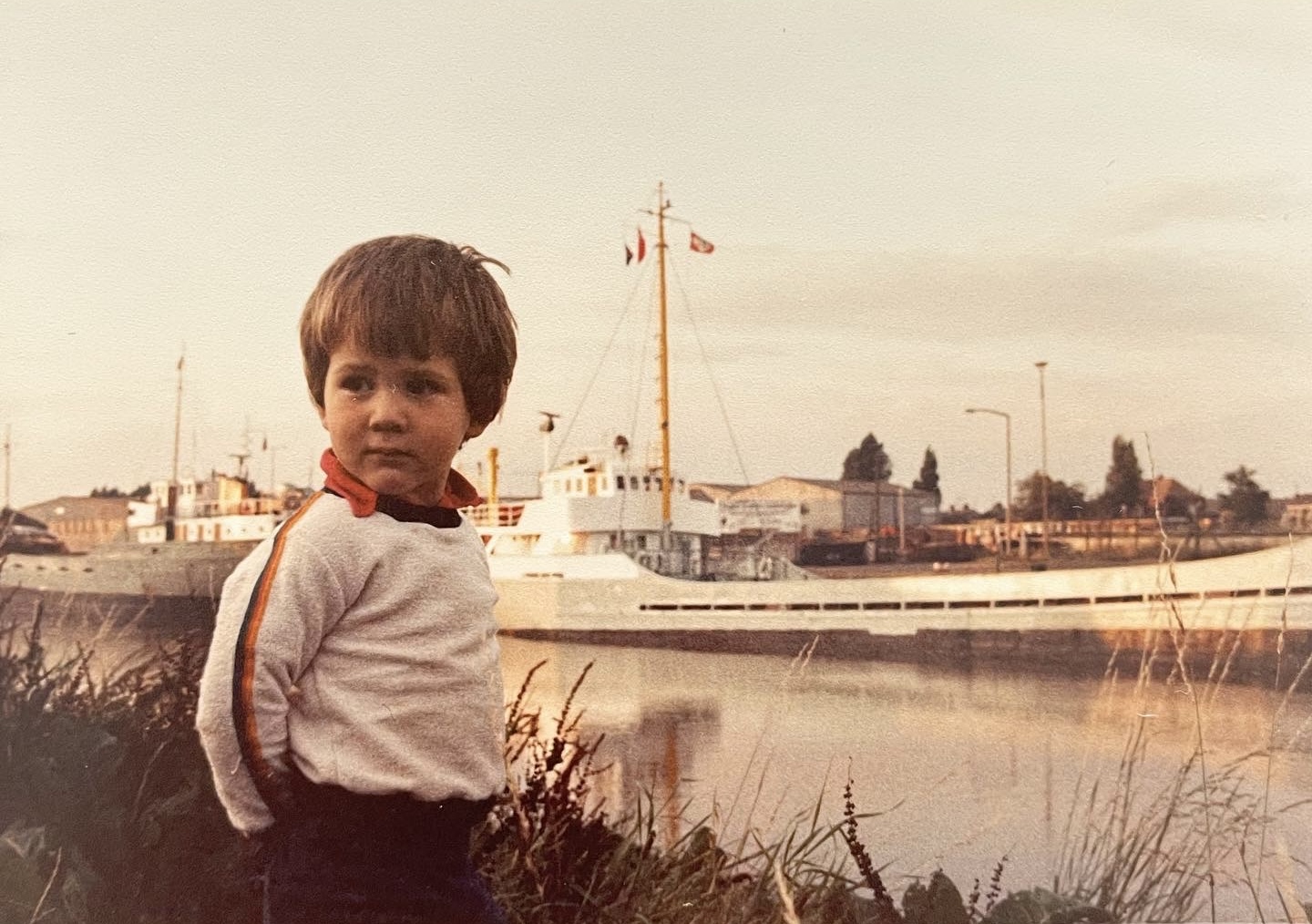
Tom Geraghty (age 5)

Stuttering and Stammering

Stutters and Stammers I’ve written previously about my experience growing up with dyspraxia, which I was diagnosed with at an early age. My dyspraxia made it difficult for me to pronounce and articulate certain sounds (called phonemes), and meant that I

Read More »
Deming out of the crisis

Deming’s 14 Points of Management

Deming’s 14 Points of Management I’m a Deming fan, and sad that I never got to meet him or attend any of his lectures. W. E. Deming is possibly most well known for his “PDCA” (Plan-Do-Check-Act) cycle, which is actually

Read More »
cognitive bias

Bad Management

Bad Management It’s important that we learn from our own mistakes and failures, and self-reflect in order to improve. However, there’s also a lot we can learn from things others get wrong. That, after all, is partly why psychological safety is such

Read More »
suryalila and the om dome

Verbally Speaking Up at Work

Verbally Speaking Up at Work Speaking with a client this week, we surfaced an interesting organisational antipattern to psychological safety. Sometimes, within an organisation, there exists an unwritten rule: voice your concerns, but only do it verbally in a call or meeting where

Read More »
The swiss cheese model - illustrated by Deisa Tremarias

The Swiss Cheese Model

Reason’s theory holds that most accidents can be traced to one or more of four levels of failure:

Organisational influences,

Unsafe supervision,

Preconditions for unsafe acts, and

The unsafe acts themselves.

Read More »
employment protections and psychological safety

Employment Protections and Psychological Safety

Executive Summary This pilot study explored the relationship between employment protections—in law and organisational policy—and psychological safety at work. Drawing on 84 responses from participants across multiple countries, the research sought to understand whether stronger employment rights correlate with greater

Read More »
psychological safety - goodharts law

Choosing a psychometric tool

Measuring psychological safety? Here are some tips on choosing the right tool for the job. As awareness of the importance of psychological safety in the workplace increases, there is a corresponding increase in the number of psychometric tools, applications and

Read More »
Normal accident theory

Normal Accidents

Normal Accidents Charles Perrow is regarded as a pivotal figure in the theory of why and how things fail. He served as a sociology professor at Yale and Stanford and was primarily focused on the influence of large organisations on

Read More »
psychological safety is not the goal

Psychological Safety is not the goal

Psychological Safety is not the goal Now, this might seem an odd thing to say for someone who makes a living by helping people understand and foster psychological safety, but it’s true. Psychological safety isn’t the goal; the goal is whatever your

Read More »