• Psychological Safety
  • Organisational Training
    • – Ignite: Senior Leaders
    • – Impact: Team Workshop
    • – Delivering Feedback
    • – CRM for Non-Aviation Teams
    • – HOP: Human and Organisational Performance
  • Online Workshops
    • – Train the Trainer
    • – Fundamentals
    • – Practices
    • – Leadership
    • – Advanced
    • – Measurement
    • – Workshop Facilitation
    • – HOP
    • – Delivering Feedback
  • Resources
    • – Tool Kits
    • – Free Resources
    • – Newsletter
    • – Articles
    • – Research
    • – Shop
    • – Community
    • – Practices
    • – What is Psychological Safety?
  • About Us
  • Contact
  • Search
  • Tool Kits
    • Action Pack
    • Trainer Toolkit
    • Practitioner Bundle
    • Practice Playbook: Feedback​
    • Practice Playbook: Technology​
    • Practice Playbook: Inclusion​
    • Practice Playbook: Education​
    • Practice Playbook: Healthcare​
  • Organisational Training
    • Ignite for Senior Leaders
    • Impact Team Workshop
    • Management Masterclass
    • Delivering Effective Feedback
    • HOP: Human and Organisational Performance
    • CRM for Non-Aviation Teams
    • Train the Trainer
  • Online Workshops
    • Complete Online Course
    • Psychological Safety Fundamentals
    • Practice Masterclass
    • Leadership & Management
    • Advanced Psychological Safety
    • Measuring Psychological Safety
    • Workshop Design and Facilitation
    • HOP Fundamentals
    • Delivering Effective Feedback
psych safety logo white
  • Resources
    • Tool Kits
    • Free Resources
    • Newsletter
    • Research
    • Shop
    • Podcasts & Talks
    • Videos
    • Community
    • Events & Psych Safety Days
  • Articles
    • Search
    • What is Psychological Safety?
    • The History of Psychological Safety
    • Psychological Safety Practices
    • Psychological Safety In The Workplace
    • Research
    • Measure Psychological Safety
    • Human Organisational Performance (HOP)
  • The Psych Safety Team
    • Contact Us
    • About The Team
    • Tom Geraghty
    • Jade Garratt
  • Tool Kits
    • Action Pack
    • Trainer Toolkit
    • Practitioner Bundle
    • Practice Playbook: Feedback​
    • Practice Playbook: Technology​
    • Practice Playbook: Inclusion​
    • Practice Playbook: Education​
    • Practice Playbook: Healthcare​
  • Organisational Training
    • Ignite for Senior Leaders
    • Impact Team Workshop
    • Management Masterclass
    • Delivering Effective Feedback
    • HOP: Human and Organisational Performance
    • CRM for Non-Aviation Teams
    • Train the Trainer
  • Online Workshops
    • Complete Online Course
    • Psychological Safety Fundamentals
    • Practice Masterclass
    • Leadership & Management
    • Advanced Psychological Safety
    • Measuring Psychological Safety
    • Workshop Design and Facilitation
    • HOP Fundamentals
    • Delivering Effective Feedback
psych safety logo white
  • Resources
    • Tool Kits
    • Free Resources
    • Newsletter
    • Research
    • Shop
    • Podcasts & Talks
    • Videos
    • Community
    • Events & Psych Safety Days
  • Articles
    • Search
    • What is Psychological Safety?
    • The History of Psychological Safety
    • Psychological Safety Practices
    • Psychological Safety In The Workplace
    • Research
    • Measure Psychological Safety
    • Human Organisational Performance (HOP)
  • The Psych Safety Team
    • Contact Us
    • About The Team
    • Tom Geraghty
    • Jade Garratt
Newsletter  ·  Psychological Safety  ·  Psychological Safety In The Workplace

Just Culture

May 23, 2025

Why Just Culture Isn’t Sticking

by Tom Geraghty

What Do We Mean by “Just” Culture?

The concept of a “Just Culture” was first developed in James Reason’s 1997 book Managing the Risks of Organisational Accidents. When we say “Just Culture”, we’re using “just” as in “justice”, not “just” as in “only”. And that itself can lead to some misinterpretations of what a Just Culture actually means. For many of us, the concept of justice is intertwined with the primarily retributive model that we’re familiar with in society (you do wrong, you get punished) – and so we might assume a Just Culture is largely about retribution. But actually, the justice in Just Culture aligns much more closely with a restorative model of justice. More on that later.

Reason argued that Just Culture is essential for a reporting culture, where people feel safe to report incidents, near misses, and unsafe conditions. Without reporting, we can’t learn from things that happen: which means that mistakes keep happening, safety doesn’t improve, and people suffer harm as a result. Reason framed Just Culture as a core component of a broader “safety culture” (and there’s a correlating debate about what “safety culture” is or if it even exists…). 

David Marx later expanded this thinking into healthcare in his 2001 report Patient Safety and the “Just Culture”: A Primer for Health Care Executives, helping to establish Just Culture as a key approach for learning from harm and building safer systems in complex, high-consequence environments. Since then Sidney Dekker has spoken and written extensively on Just Culture, including his excellent 2007 book Just Culture: Balancing Safety and Accountability. Dekker describes that Just Culture promotes learning, justice and safety, and reminds us that we can choose to be either backward-looking and retributive, or forward-looking and change-oriented.

Despite much effort, many organisations struggle to embed Just Culture effectively and sustainably. Many of our clients, particularly in healthcare, find it difficult, even after months and years of hard work, to make Just Culture “stick”. That’s where our work on fostering psychological safety comes in. 🙂

Balancing Accountability and Learning

While perhaps most widely adopted in healthcare, Just Culture is also applicable across aviation, industry, and other safety-critical sectors. It is designed to balance accountability with learning, recognising that humans will inevitably make mistakes and that punitive responses often obstruct meaningful improvement. Instead, Just Culture promotes systems that treat individuals with fairness and compassion. Learning and restoration are considered more important than blame and punishment. 

The tragic case of Elaine Bromiley is a key example of this: Elaine, a healthy woman undergoing a routine operation, died following complications with airway management when her team of doctors became fixated on a single procedure (intubation). Although nurses present recognised the escalating danger, they did not speak up, held back by the steep power gradient between the doctors and the nurses present. Elaine’s death prompted her husband Martin, an airline pilot with expertise in human factors, to found the excellent Clinical Human Factors Group, or CHFG, which works to ensure that lessons are learned and tragedies like this are not repeated. Rather than focusing on blame or punishment, Elaine’s story highlights the need for a Just Culture – one that enables open, candid and timely communication, supports learning from mistakes, recognises and cares for both the patients harmed (“first victims”) and the staff involved (“second victims”), and ultimately focuses on preventing future harm.

An important principle contained within Just Culture is local rationality: people make decisions that seem entirely rational to them at the moment given their immediate context, knowledge, and understanding. The opposite of local rationality is the “fundamental attribution error”, which seduces us to blame people’s character or competence instead of recognising contextual or systemic influences. 

Unless we assess actions through the lens of local rationality (understanding what seemed reasonable to that person at that time) we risk applying hindsight and outcome bias and using counterfactual phrases like “if only they’d…” or “they should have…”. These undermine psychological safety and restrict our ability to learn from failures. 

It’s worth acknowledging that much of the disconnect between what we think ‘should’ have happened, with the benefit of hindsight, and what actually happened is also driven by a gap between ‘work as imagined’ and ‘work as done’. Rules and procedures are often written with ideal scenarios in mind, not the messy, complex, resource-constrained, high-pressure conditions of real work, and thus very often, work is not happening day-to-day as we imagine it is. People often need to find workarounds just to get the work done. When things go wrong, we should ask: were individuals deviating from rules because they were being reckless, or because the rules simply didn’t fit the reality? How often has this rule been broken and resulted in a good outcome? Just because this time a deviation resulted in a poor outcome, it doesn’t necessarily mean that deviating from the rules is the problem.

Why Blame Gets in the Way

While a restorative Just Culture isn’t necessarily blame-free, and nor is it about polarising people against systems, it is about recognising that people operate within systems. Mistakes often reflect systemic issues rather than isolated individual failings. Healthcare professionals need robust systems and supportive processes to perform at their best. At its core Just Culture suggests that in most cases, blame is the enemy of safety, advocating instead for open, fair, and restorative responses to mistakes. This challenges our instinctive inclination towards ‘blametropism’ – the tendency to immediately seek someone or something to blame whenever something goes wrong. Overcoming this natural impulse is fundamental to fostering genuine learning and restoration. 

“Being blamed in the context of a safety investigation is contrary to the purpose of a safety investigation, partly because it is deathly for an occurrence reporting system, and for any subsequent investigations and learning.” – Steven Shorrock [link[

The Restorative Approach to Accountability

A critical element of Just Culture is its restorative aspect, ensuring that those harmed by mistakes (patients, families, and also colleagues – the “second victims”) feel heard, understood, and supported, rather than ignored or dismissed. Dekker emphasises that a restorative Just Culture centres on understanding who was hurt, identifying their needs, and determining whose obligation it is to meet those needs. 

This calls for a rethinking of accountability: not as a matter of identifying who broke the rules or who was last in contact with the patient in order to assign blame or punishment (a retributive model), but instead as a process of exploring who was harmed, identifying their needs, and taking responsibility for addressing those needs (a restorative model). In this restorative context, “accountability” means something different to assigning fault – it’s about seeking ‘an account’ of what happened – something that we can use to improve our understanding and learn from. It’s certainly not something that’s used to impose punishment. In a truly restorative culture, those involved in an incident welcome the opportunity to participate in this process, which both rebuilds trust for those involved and/or harmed, and provides a powerful opportunity for both individual and collective learning.

A culture cannot claim to be ‘Just’ if it further harms the people it exists to care for. Too often, patients and families are retraumatised by defensive institutional responses that prioritise self-protection – whether reputational or legal – over honesty, empathy, and healing. A truly restorative Just Culture centres the needs of those harmed, responding with transparency, compassion, and meaningful long-term support, rather than defensiveness.

The NHS’s Patient Safety Incident Response Framework (PSIRF) makes this relationship explicit: it recognises that psychologically safe cultures and behaviours must be in place before approaches like Just Culture can take root. PSIRF signals a significant shift in mindset from “accountability” to learning, and from individual failure to systemic understanding. But frameworks like PSIRF and resources like the NHS “Being Fair” tool, without practical action, structural and systemic change, are unlikely to be enough to change the experience of people at the sharp end, and the patients they serve. 

Beyond “What’s gone wrong?”

One challenge is that we can (and should) also learn from what goes right as well as what goes wrong. Studying everyday work, especially when things succeed despite challenging conditions, can uncover the adaptations, relationships, and quiet brilliance that make systems resilient. Just Culture tends to lean towards (at least in practice) primarily learning from failures. We would benefit from changing the primary trigger for learning investigations from the amount of harm caused to the learning potential of the event. Not all incidents are equally useful for learning. The most valuable insights often come from “Goldilocks events”: not too big, not too small, not too rare, and not too politically sensitive to explore with honesty. Just Culture must recognise this if it’s to become more than solely a reactive approach.

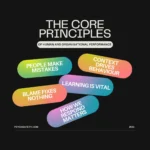
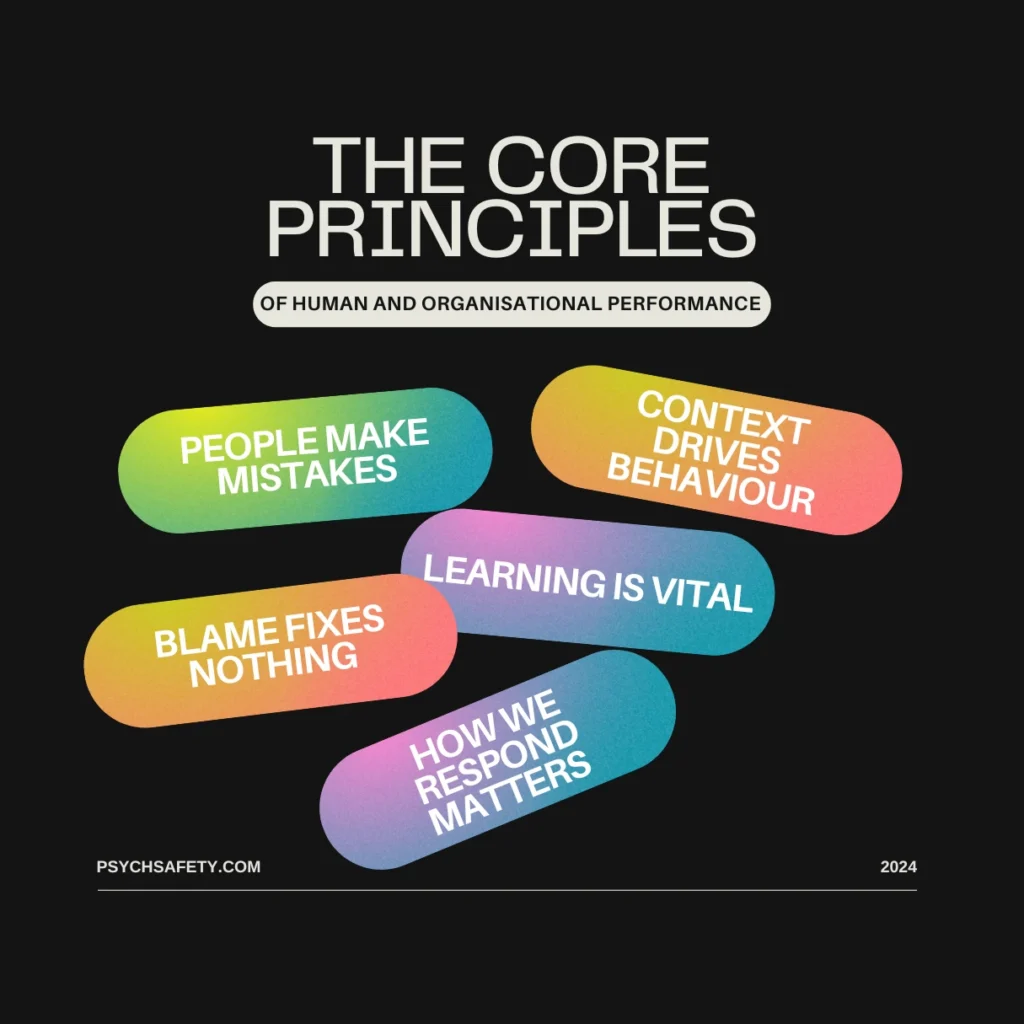
And when we start to expand out our view of what Just Culture is and can be, you might notice how well it aligns with the Human and Organisational Performance (HOP) principles:

  • People make mistakes
  • Blame fixes nothing.
  • Context drives behaviour
  • Learning is vital
  • Response matters

The Challenge of Embedding Just Culture

Many organisations enthusiastically attempt to implement Just Culture practices, such as open reporting systems, restorative meetings, or non-punitive investigations. Yet frequently, these practices don’t ‘stick’. People and teams may gradually and insidiously revert to previous, more punitive methods of dealing with errors. The underlying reason is often that practices and tools have been imposed without establishing the necessary foundational culture.

At an organisational level, it’s necessary to consider the four lenses of organisational change: Values, Behaviours, Practices, and Systems and Structures. If we neglect just one of these lenses when we’re considering change, it won’t be sustainable.

In other words, simply imposing Just Culture mechanics into an existing system, without first addressing how the deeper shared values, behaviours, practices work alongside organisational systems and structures, is like building a car but forgetting to put the fuel in. It might look right, but it won’t run.

Lessons from NUMMI and the Importance of Culture

All this reminds me of the NUMMI (New United Motor Manufacturing, Inc.) plant in California during the 1980s – a joint venture between General Motors and Toyota. The project aimed to revitalise an underperforming GM factory by introducing Toyota’s Production System (TPS), including tools like the Andon Cord, which allows workers to stop the production line to address issues immediately.

What made NUMMI successful wasn’t just the introduction of these tools, but Toyota’s committed investment in building a culture of continuous improvement, collective responsibility, and psychological safety. Employees received extensive training, including two-week immersions in Japan, to help shift not only their skills but also their beliefs and behaviours. The focus wasn’t on control, but on equipping and trusting workers to do quality work.

However, GM later failed to replicate this success in other plants. They tried to adopt the surface-level practices of TPS without the cultural transformation that underpinned them. In Detroit, for example, workers ignored the new tools because the deeper cultural changes – trust, respect, and shared ownership – had never been made. What changed the culture at NUMMI wasn’t just practices or process, it was genuinely giving people the means and understanding by which they could successfully do their jobs.

Structural Barriers and Power Dynamics

In healthcare, structural and systemic barriers frequently impede the adoption of Just Culture principles. Entrenched hierarchies, power gradients between consultants and other frontline staff, and bureaucratic “accountability” practices create environments where mistakes are often hidden rather than explored. When something goes significantly wrong, there is often a belief that someone must be held “accountable” – whether that’s someone at the sharp end (a clinical practitioner, for example) or at the blunt end (a senior exec, for example). Media coverage also plays a large role in organisational behaviour: while it is often essential in exposing harm and giving voice to victims, it can also promote simplistic, blame-heavy narratives. Just Culture cannot survive in environments dominated by headline-driven scapegoating.

Even when organisations adopt Just Culture principles internally, their efforts are often undermined by broader legal, regulatory, and even media pressures. A clinician may face a compassionate, system-focused local learning investigation, and simultaneously endure a distressing coroner’s inquest that feels punitive, or a professional referral process that focuses narrowly on individual fault. Until our wider systems are reformed to align with Just Culture principles, fear of negative repercussions from admitting mistakes and raising concerns will persist.

Implementing Just Culture Successfully

To successfully embed Just Culture, we need to create the underlying conditions for it to persist sustainably. Psychological safety is the substrate in which a Just Culture thrives. Without psychological safety, employees remain reluctant to admit errors, speak openly about risks, or participate in restorative processes.

We often see this disconnect clearly in practice. Organisations may adopt Just Culture principles and practices superficially, yet fail to cultivate the underlying beliefs, norms, and day-to-day interactions that genuinely enable it. These foundational elements include:

  1. Reduce power gradients.
  2. Establish shared behavioural norms.
  3. Build systems that reward open communication and candour.
  4. Address problematic behaviour.
  5. Recognise that psychological safety looks different for everyone.
  6. Tackle structural and systemic barriers.

Ultimately, Just Culture thrives in environments where psychological safety serves as the foundation. Without psychological safety, efforts to embed Just Culture remain well-intentioned but ultimately superficial. We all learn by making mistakes, but we don’t have time to make every mistake ourselves – so we need to learn from those of others. The power of a psychologically safe, restorative Just Culture lies in creating a space where people can tell their stories, with all the messy details, and share that valuable learning with others without fear of humiliation or retribution. 

References and further reading:

James Titcombe: Talk of Just Culture Without System Change Is a False Promise: https://patientsafetyfirst.wordpress.com/2025/05/16/we-cant-talk-about-just-culture-without-changing-the-system-around-it/

Being fair tool: Supporting staff following a patient safety incident: https://www.england.nhs.uk/publication/being-fair-tool/

PSIRF: The Patient Safety Incident Response Framework: https://psychsafety.com/psirf/

John Shook: How NUMMI Changed Its Culture: https://www.lean.org/the-lean-post/articles/how-nummi-changed-its-culture/

Dekker, S: Just Culture | Balancing Safety and Accountability https://ndl.ethernet.edu.et/bitstream/123456789/20186/1/118.%20Sidney%20Dekker.pdf

Dekker, S: Just Culture: who gets to draw the line? https://www.humanfactors.lth.se/fileadmin/lusa/Sidney_Dekker/articles/2008/JustCultureCTW.pdf

Shorrock, S. Just Culture: Who Are We Really Afraid Of? https://humanisticsystems.com/2016/11/24/just-culture-who-are-we-really-afraid-of/ 

Main article photo by Pavel Danilyuk


Psychological Safety in Practice

Tackling inequalities in maternity care

This excellent in-depth piece describes how UK maternity services face deep inequalities that undermine both patient safety and staff wellbeing: mothers in poor areas and Black women suffer far higher rates of loss and complications, while maternity teams struggle under staffing shortages and burdensome reporting requirements. In this piece, NHS Trust leaders agree that building psychological safety and a culture of open, blame-free learning can dramatically improve experiences and outcomes.

Improvement will require adequate resourcing, clear national frameworks and systemic change.

“Birth is neither inherently safe nor dangerous – it is both until reality declares otherwise.” (Titcombe, 2014).


“Deferential Speech Syndrome” (DSS) in surgical operating theatres

In this paper, Jennifer Dunn introduces what she terms “Deferential Speech Syndrome” (DSS) – the tendency of team members to soften or suppress the communication in the face of a power gradient. Cases such as Elaine Bromiley (above) demonstrate how critical this effect can be. DSS (also known as “attenuated voice”, or “safety silence” elsewhere) is, simply, the opposite of psychological safety.

Drawing on lessons from high-reliability industries, Dunn shows how aviation’s Crew Resource Management (CRM) and nuclear power’s layered decision-protocols illustrate that flattening power gradients enhances both resilience and psychological safety in complex, high-consequence environments.

However, I’m not a fan of the pathologisation of deferential speech as a “syndrome” because it implies an individualisation of the issue, rather than a reflection of systemic and contextual effects.


RDF 2025

This week I was lucky enough to deliver the first night keynote at RDF 2025 – the conference for professionals in health and care research. I also joined a wonderful panel of folks who shared powerful, insightful, and actionable stories of psychological safety and the impact it has on our lives as well as outcomes at work. Thanks so much to the organisers and everyone who made it a great success!

Tom Geraghty speaking at a conference
Tom Geraghty conference talk - fear of speaking up
Photo credit Elizabeth Romano

Employee “Free” Speech vs. Organisational Censorship on Social Media

Here’s an interesting paper. Censoring employees’ prejudiced social media posts has opposite effects on psychological safety depending on political ideology: it reassures some by signalling an inclusive, anti‐prejudice stance but alarms others who value absolute free‐speech autonomy. Through qualitative observational and experimental surveys, Solomon, Scott, and Hall demonstrate that this ideological split can be resolved not by “choosing sides” but by implementing specific, nuanced, policies.

Policies with clear anti‐prejudice values, that focus on genuinely threatening content (especially against traditionally marginalised groups) can uphold both employee well‐being as well as freedom of expression, and appear to improve psychological safety for folks across the political spectrum.


This week’s poem:

Extract from “An Essay on Criticism” by Alexander Pope

And while self-love each jealous writer rules,
Contending wits become the sport of fools:
But still the worst with most regret commend,
For each ill author is as bad a friend.
To what base ends, and by what abject ways,
Are mortals urg’d through sacred lust of praise!
Ah ne’er so dire a thirst of glory boast,
Nor in the critic let the man be lost!
Good nature and good sense must ever join;
To err is human; to forgive, divine.


healthcarejust culturematernitypsychological safety

Tom Geraghty

Tom Geraghty, co-founder and delivery lead at Iterum Ltd, is an expert in high performing teams and psychological safety. Leveraging his unique background in ecological research and technology, Tom has held CIO/CTO roles in a range of sectors from tech startups to global finance firms. He holds a degree in Ecology, an MBA, and a Masters in Global Health. His mission is to make workplaces safer, higher performing, and more inclusive. Tom has shared his insights at major events such as The IT Leaders Summit, the NHS Senior Leadership Conference, and EHS Global Conferences. Connect with him on LinkedIn or email tom@psychsafety.com

Related Articles


t shaped vs broken comb
Newsletter  ·  Psychological Safety
Psychological Safety: Command & Control
June 6, 2022
psychological safety videos
Create and Maintain  ·  In Technology  ·  Learning and Development  ·  Measure  ·  Newsletter  ·  Psychological Safety  ·  Psychological Safety In The Workplace  ·  Theory and Research
Psychological Safety Videos, Fraud, Safety in Software, Conflict in Organisations and more!
November 22, 2024
I’m OK, you’re ok - transactional analysis
Transactional Analysis
Previous Article
Rebuilding Psychological Safety When It's Broken
Next Article
  • Subscribe to the Psychological Safety Newsletter

  • psychological safety train the trainer
  • Get Certified! Join online workshops, or explore training and consultancy for leaders, teams and organisations.

    Discover our training options for Human and Organisational Performance and CRM for non-aviation teams.

    If you're a trainer, consultant or facilitator, get certified in our Train the Trainer complete online programme and download the Training Materials for Facilitators and Trainers.

  • human and organisational performance training
  • building and maintaining psychological safety for your team
    Download the complete Practitioners' guide to psychological safety
  • psychological safety trainer toolkit
  • Download the Psychological Safety Trainer Toolkit. Containing powerful resources that you can use to deliver your own training and workshops!

  • psych safety logo

    Sponsorship and advertising. Reach over 11,000 weekly readers and 500,000 online visitors with your message in our newsletter.

  • theres no such thing as too much psychological safety
    Grab Psychological Safety Stickers from our Online Shop!
  • Psych Safety Day

    Find out more about our Psych Safety Days - in-person and virtual events to share, learn, and connect with other enthusiasts, practitioners and researchers on psychological safety and related topics.

  • Categories

    • Newsletter
    • Psychological Safety
      • Create and Maintain
      • Human Organisational Performance (HOP)
      • In Technology
      • Learning and Development
      • Measure
      • Psychological Safety In The Workplace
      • Theory and Research
    • Random
  • Recent Posts

    • The Streetlight Effect
      The Streetlight Effect
      January 8, 2026
    • The "Fist of Five"
      The "Fist of Five"
      December 19, 2025
    • Psychological Bravery
      Psychological Bravery
      December 18, 2025
    • Psych Safety Book List 2025
      Psych Safety Book List 2025
      December 18, 2025
    • Psych Safety 2025 Unwrapped
      Psych Safety 2025 Unwrapped
      December 15, 2025
    • Plan Continuation Bias
      Plan Continuation Bias
      December 12, 2025
    • Whistleblowing and Psychological Safety

      Whistleblowing and Psychological Safety
      December 4, 2025
    • How Childhood Socioeconomic Status Shapes Psychological Safety and Career Risk-Taking at Work
      How Childhood Socioeconomic Status Shapes Psychological Safety and Career Risk-Taking at Work
      November 27, 2025
    • Safety and the Myth of Self-Reliance
      Safety and the Myth of Self-Reliance
      November 24, 2025
    • The Watermelon Effect and "Greenwashing"

      The Watermelon Effect and "Greenwashing"
      November 7, 2025
    • Individual Resilience
      Individual Resilience
      October 31, 2025
    • Counterfactuals
      Counterfactuals
      October 24, 2025
    • Coaching and Psychological Safety
      Coaching and Psychological Safety
      October 17, 2025
    • Five Ecological Concepts for Working in Organisational Change

      Five Ecological Concepts for Working in Organisational Change
      October 9, 2025
    • The Sharp End & Blunt End of Education
      The Sharp End & Blunt End of Education
      October 3, 2025
    • Forced Vulnerability
      Forced Vulnerability
      September 26, 2025
    • New Sticker Drop! "Zombies Are Scary"
      New Sticker Drop! "Zombies Are Scary"
      September 22, 2025
    • Reflections - Part Four: A Rights-Based Approach

      Reflections - Part Four: A Rights-Based Approach
      September 16, 2025
    • Reflections - Part Three: The Safety to Dissent
      Reflections - Part Three: The Safety to Dissent
      September 12, 2025
    • Reflections - Part Two: Power and Difference
      Reflections - Part Two: Power and Difference
      September 4, 2025
    • The Psychological Safety Trainer Toolkit
      The Psychological Safety Trainer Toolkit
      September 1, 2025
    • Reflections on Psychological Safety: Five Years of Learning
      Reflections on Psychological Safety: Five Years of Learning
      August 29, 2025
    • Not Feeling Seen: Eye Contact and Psychological Safety
      Not Feeling Seen: Eye Contact and Psychological Safety
      August 21, 2025
    • Psychological Safety Isn't Enough
      Psychological Safety Isn't Enough
      August 15, 2025
    • Psych Safety Day / Week 2026
      Psych Safety Day / Week 2026
      August 11, 2025
    • The Amagasaki Disaster
      The Amagasaki Disaster
      August 8, 2025
    • Psychological safety isn't the same for everyone
      Psychological safety isn't the same for everyone
      August 4, 2025
    • Psychological Safety Books for Children

      Psychological Safety Books for Children
      August 1, 2025
    • Psychological Safety and Creativity
      Psychological Safety and Creativity
      July 25, 2025
    • The State of Psychological Safety Survey: 2025
      The State of Psychological Safety Survey: 2025
      July 19, 2025
    • Barriers to Psychological Safety
      Barriers to Psychological Safety
      July 18, 2025
    • How you respond matters.
      How you respond matters.
      July 11, 2025
    • Practices that Foster Psychological Safety
      Practices that Foster Psychological Safety
      July 4, 2025
    • Feedback in the workplace
      Feedback in the workplace
      June 27, 2025
    • Psych Safety Day 2025
      Psych Safety Day 2025
      June 21, 2025
    • Job Security and Psychological Safety
      Job Security and Psychological Safety
      June 20, 2025
    • How familiar are people with the concept of psychological safety?
      How familiar are people with the concept of psychological safety?
      June 13, 2025
    • Learning at Psych Safety
      Learning at Psych Safety
      June 13, 2025
    • Why do We Foster Psychological Safety?
      Why do We Foster Psychological Safety?
      June 6, 2025
    • Psychological Safety in Aviation - Special Edition
      Psychological Safety in Aviation - Special Edition
      May 30, 2025
    • Rebuilding Psychological Safety When It's Broken
      Rebuilding Psychological Safety When It's Broken
      May 30, 2025
    • Just Culture
      Just Culture
      May 23, 2025
    • Transactional Analysis
      Transactional Analysis
      May 15, 2025
    • Comfort vs Need
      Comfort vs Need
      May 9, 2025
    • Sociological Safety
      Sociological Safety
      May 2, 2025
    • Humour and Psychological Safety
      Humour and Psychological Safety
      May 1, 2025
    • Safety-Organised Criticality
      Safety-Organised Criticality
      April 25, 2025
    • Leaders are not solely responsible for psychological safety.
      Leaders are not solely responsible for psychological safety.
      April 21, 2025
    • Psychological Safety in Our Personal Lives

      Psychological Safety in Our Personal Lives
      April 17, 2025
    • The Organisational Fabric of Psychological Safety

      The Organisational Fabric of Psychological Safety
      April 10, 2025
    • Colution
      April 7, 2025
    • All Feedback Is Subjective
      All Feedback Is Subjective
      April 4, 2025
    • Micromanagement
      Micromanagement
      March 21, 2025
    • Rewetting Organisations
      Rewetting Organisations
      March 14, 2025
    • Spectra of Participation
      Spectra of Participation
      March 7, 2025
    • Twitter
    • LinkedIn


Sign up to our newsletter & get weekly insights and research

About

The Psychological Safety Team
Our Mission
Our Core Principles
Privacy Policy
Terms of Business

Learn

Corporate Training
Online Workshops
Newsletter
Professional Certification

Tools

Tool Kits
Articles
What is Psychological Safety?
The History of Psychological Safety

Get Connected

Contact us
Attend a Meetup
Join the Community
Connect with us on LinkedIn
View our YouTube Channel
© 2025 Iterum Ltd
We support LGBTQ+ rights all year round. But we also celebrate pride too.
We support LGBTQ+ rights all year round. But we also celebrate pride!
Content on this website is CC BY-NC-SA
Written by humans, not by AI