
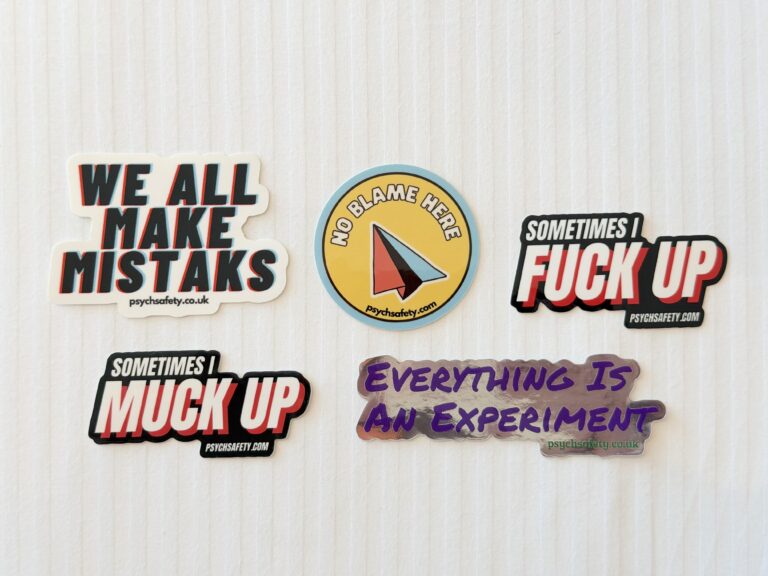
We publish about once a week, and have done so for about six years There are now over 350 articles o...

The Case for Less Eye Contact We’ve made the case before that the mainstream advice about eye cont...
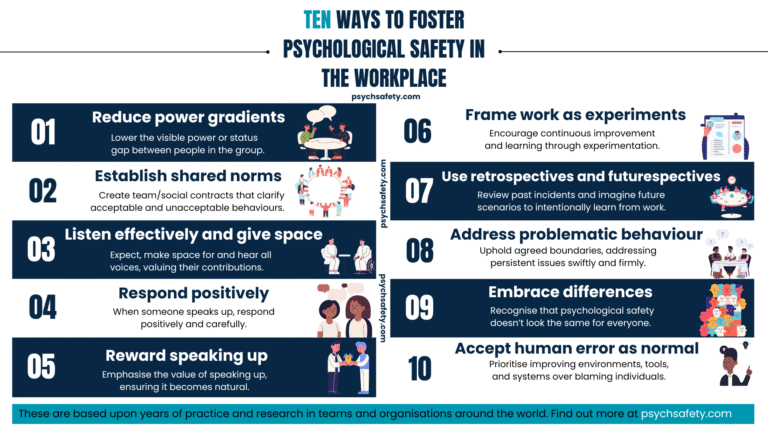
You may well have heard the phrase ‘psychological safety’ thrown around – perhaps referenc...

Organisational substrate is the accumulated physical and non-physical matter that an organisation li...

Crisis-Ready Teams I’m by no means a serial corporate dinner attendee, but I do feel I’ve sat th...

Body Language and Non-Verbal Communication There’s a whole industry, and a lot of terrible adv...

A Critique of The Four Stages of Psychological Safety – a second edition We’ve written a...

The more elaborate and expensive our system for understanding something, the less we may actually un...

These two pieces originally went out in the Psychological Safety Newsletter, the second (“I wa...

Seven principles for measuring people without mistaking them for data In theory at least, we measure...

The Strange Confidence of 360 Degree Feedback 360 degree feedback promises that it will offer truth ...

Reading the air: high and low context communication in teams Picture the scene: you’re in a me...

