Colution (noun)A solution that emerges through genuine collaboration, where all parties contribute ideas, insights, and perspectives to co-create an outcome that none could have achieved alone. Usage Examples in Sentences

Blog Archives

Rewetting Organisations by Tom Geraghty Allowing the system to self-organise by improving the substrate: creating the underlying conditions for change. When I was studying ecology at university, one of the activities we undertook in our field trips was helping to […]

Psychological Safety in Practice Team Learning in the Field: An Organizing Framework and Avenues for Future Research This excellent paper from Amy Edmondson and Jean-François Harvey affirms that teams learn most effectively when members feel safe to speak up, take interpersonal risks, […]

Déformation professionnelle By Tom Geraghty “Every specialist, owing to a well-known professional bias, believes that he understands the entire human being, while in reality he only grasps a tiny part of him.” Alexis Carrel, Nobel laureate We all see the […]

All Models Are Wrong, and Some Are Useful By Tom Geraghty This is one of my favourite, and most often used, aphorisms. It’s attributed to George Box, a British statistician, from a 1976 paper on Science and Statistics, though the […]

Efficiency vs Resilience By Tom Geraghty Standardisation is often used as a way to increase organisational efficiency and scalability. Through reducing variation, we can standardise our tools, training, processes and more, enabling us to optimise systems and better achieve our desired […]
An Exploration of Dan Radecki’s S.A.F.E.T.Y.™ Model Psychological safety is a deceptively simple idea: people feel able to speak up with questions, concerns, or mistakes without fear of embarrassment or reprisal. Amy Edmondson’s now-canonical definition captures this precisely, grounding decades […]
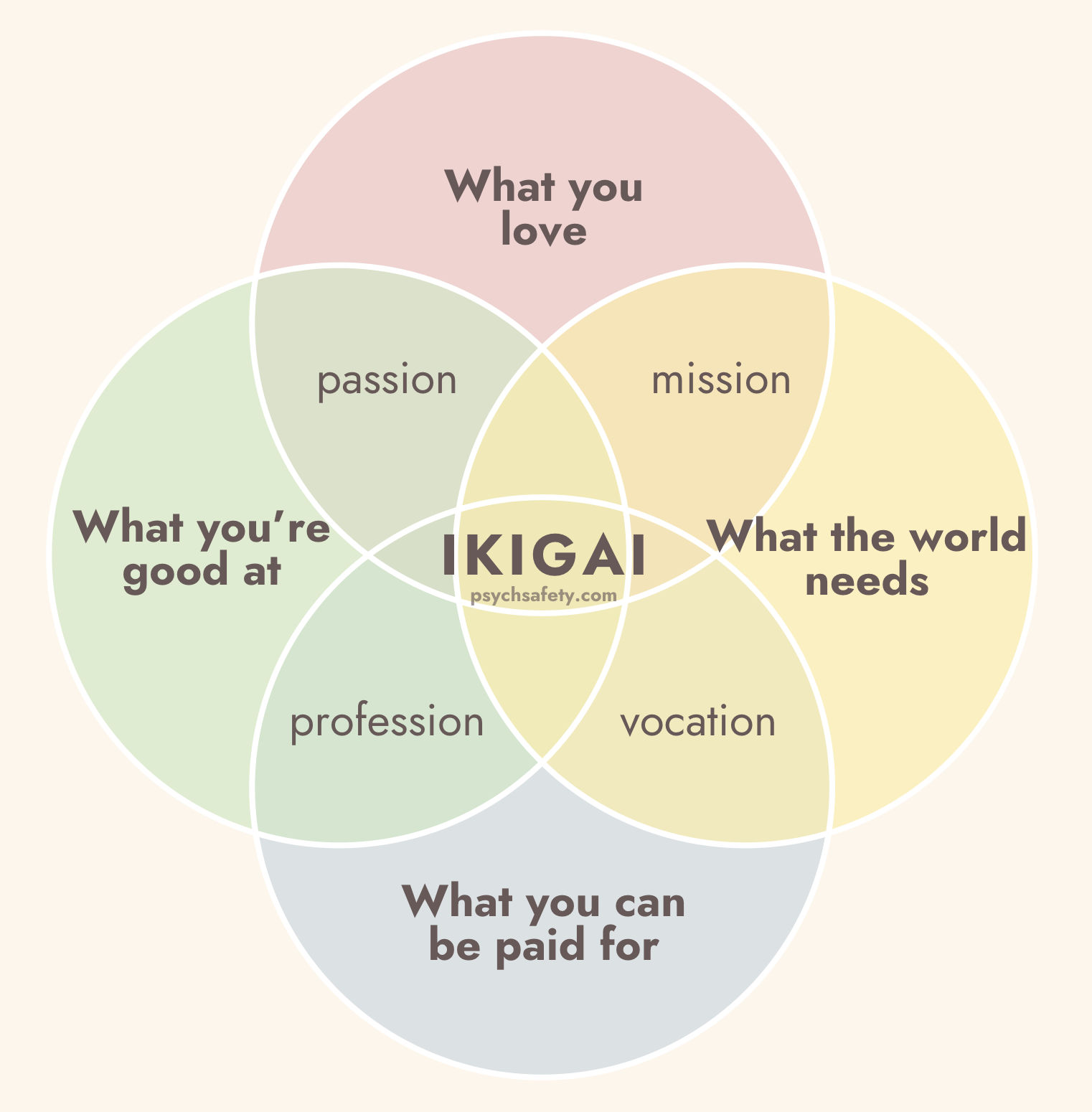
“what you love,” “what the world needs,” “what you can be paid for,” and “what you are good at”, the idea being that the intersection of all of these is where we find Ikigai.

Why silence often wins over voice When someone chooses not to speak up at work, whether it’s to raise a concern, ask a question, or offer a dissenting view, it’s easy to assume they’ve rationally performed the mental cost-benefit calculation […]

Addressing Power through “Flattening” Organisations Steep power gradients are one of the most significant factors that contribute to reducing psychological safety. These steep differentials in perceived power have contributed to many disasters including the Tenerife Airport disaster in 1977, Chernobyl, […]
by ALEXIS CARREL Find the pdf of Man, The Unknown, by Alexis Carrel, here at the wayback archive.

Sometimes I Muck Up After lots of you asked for “Safe For Work” versions of our “Sometimes I F*ck Up” stickers, we’ve created these “Sometimes I Muck Up” stickers available in our online shop! Delivering Effective Feedback There are still a few […]
An Exploration of The 5 Pillars of Psychological Safety (TM: Gina Battye) Psychological safety is one of those concepts that’s deceptively simple. On the surface, it’s about whether people feel able to speak up without fear of negative consequences. But […]
Exploring The Psychological Safety Index (PSI) (Trademark: The Fearless Organisation) Psychological safety is one of those concepts that’s easy to grasp intuitively, but much harder to measure. We can usually sense when a team feels open, trusting, and collaborative – […]

Blametropism By Tom Geraghty, edited by Jade Garratt It’s a common fallacy that psychological safety means having a “blameless” culture. Just like so many misconceptions around psychological safety, that’s not actually the case. Sometimes we can’t avoid blame and, on […]

Typologies of Power In a few previous newsletters, we’ve gotten into power dynamics, power gradients, “power over” vs “power for” and “power to” (see Mary Parker Follett). Steep power gradients are the number one inhibitor of psychological safety, and addressing […]

We’ve been rather busy this week, in the midst of this round of psychological safety online workshops, including fundamentals, practices, leadership, measurement, advanced, and workshop design and facilitation. With that in mind, we thought it would be a good time […]

A team is only as safe as the least safe person When measuring the psychological safety in a team, we often are asked which measurement should be considered the “group measurement,” given that different individuals will likely experience rather different […]

The Andon Cord It’s been a busy week with workshops and talks, so this week we’re revisiting the Andon Cord. Probably my favourite real-world psychological safety practice, the Andon Cord is a brilliant approach to quality improvement. A fundamental part […]
Academic fraud, data and dishonesty When I was studying ecology at undergraduate level, I maybe naively believed that academic research and the peer review process was the most robust and rigorous way to discover, evaluate, and build knowledge. As work, […]
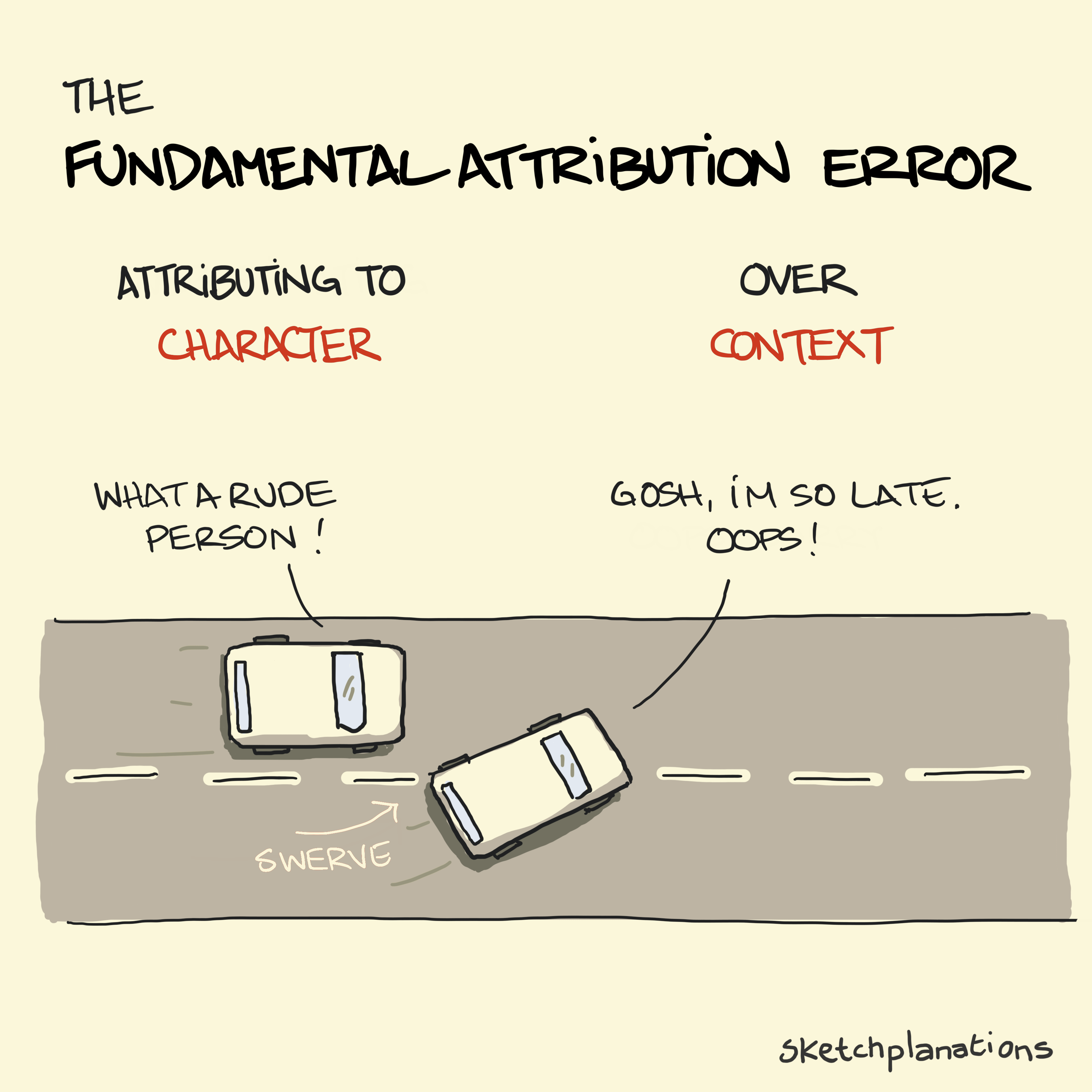
The Fundamental Attribution Error We address the Fundamental Attribution Error in most of our workshops, particularly our Feedback ones, because it’s such a common bias and it causes so many problems. Essentially, the Fundamental Attribution Error occurs when we attribute […]

The Definition Of Psychological Safety Psychological safety is defined as the belief, in a group, that we are safe to take interpersonal risks. It’s the belief that we are able to speak up with ideas, questions, concerns and mistakes, and […]


The Seven Deadly Sins of Psychological Safety I recently tried to work out how many people have attended one or more of our workshops on psychological safety, including our workshops for teams and organisations, our online workshops, and any we’ve […]

Can you see the cat? This image is a meme from 1879 (yes, memes were a thing 140+ years ago!) used by the “Georgist” movement. Henry George was an economist who examined the apparent paradox of how the USA could […]
Page 3 of 13

